It does seem like Intel is going to see their market share in the server space erode not from traditional competitors like AMD, but by upstarts using ARM.
Intel's Xeon Phi experiment hasn't produced anything cost-effective and workable yet, but if they can get that to run at low power they might have an answer to the swarms of ARM systems on the horizon.
No 64 cores, but 16 X86 Xeon Cores @ 1.3ghz with HyperThreading will give pretty much any high end ARM SOC a run for their money, a TDP of 45W also doesn't hurt ;)
Intel has made a bet that by the time ARM would get their performance to x86 levels Intel would get their power consumption to ARM SOC levels and Intel seem to have been correct on that bet.
The Xeon Phi is also pretty interesting Knight's Landing and onwards provides pretty good performance for deep-learning and other applications that companies like NVIDIA were swinging at, it's still not on the same performance level as NVIDIA's top tier of compute products but it's close and the x86 compatibility is likely to have a sufficient advantage in certain scenarios to make the Xeon Phi really competitive.
NVIDIA was planning on having x86 compatibility for it's HPC parts however both AMD and Intel killed that dream in court.
The Phi project is not directly an answer to ARM, but it's a way of trying to escape the vice-like pressure from outrageously numerous cheap ARM cores on one side and GPGPU cores on the other.
If they can't produce a cost-effective, power-efficient system with 64-256 cores then ARM will eat their lunch in a good chunk of the server market and NVidia will destroy any hope they had to get back in the supercomputer game.
I'm not saying Intel can't do it, but they sure are in a bind now. Their flagship product is a stupidly expensive 14 core Xeon that only appeals to a narrow market segment. They really don't have an answer for ARM when it comes to massively parallel server installations, and those companies, the Google and Facebook types, buy a lot of hardware.
Which is why they have the Xeon D SoCs, which are up to 45W TDP parts with up to 16 cores/32 threads.
They come with PCIE lanes and 2 10Gig ethernet on board the SoC and you have CompactPCI form factor AIB cards with Xeon Ds already.
https://www.men.de/products/cpu-boards/g25a/
This is what Intel has to combat the threat from ARM and beyond, these SOCs are quite popular now for both compute heavy industrial use (e.g. collision detection systems for aircraft, boats, and heavy duty vehicles) and for small form factor servers.
SuperMicro for example offers Micro-Blade server where 56 Xeon-D SoCs are fit into a 6u chassis that's 896 cores / 1792 threads in a single 6U server or 6272c/12544t in a full 42u rack.
I suspect with the embargo on Intel, China is highly motivated to push ARM ahead of Intel quickly. If you think Phytium and the Chinese government aren't tied at the hip you're kidding yourselves. Sure, they can't fab at 14nm but they likely will soon.
They can fab on 14/10nm just like all the other Chinese soc companies do, MediaTek is doing 20, 16 and 10nm SoC's if they couldn't they wouldn't be competitive regardless of their price.
But they aren't fabbing it in mainland China anyhow, these CPUs were fabbed in TSMC, the 28nm foundries in china aren't really capable of producing silicon as complex as this one.
China will get there, it is a national priority for them and it is understandable they need to move from being the factory of the world to becoming an innovation and R&D center sure they are literally hacking their way there but they'll get there.
China is aggressive and very intelligent with their goals and roadmaps in complete contrast to other emerging mega-nations like India, and sadly even in contrast to Europe which seem to have both the financial and the human capital to become a world leader however lacks the the will and the uniform vision to achieve that.
Don't get me wrong Europe is doing some amazing things in research especially in the academic scene and programs like Horizon 2020 are pretty impressive but they are peanuts in the grand scheme of things, China on the other hand says in 10 years I want to be able to make X and they get there doesn't matter if X is canned goods or high end CPUs.
China is the US in the 50's be the 1st in everything, do huge national projects to get there, invest in science, technology and education all for the national pride and glory.
As much as I'm "scared" of China I really admire their moonshot spirit in the past decades if they won't implode before getting there I hope they'll end up being benevolent overlords.
China will have to get there on their own, however; no one is willing to share such fab technology with them, or sell them equipment like Germany does for much of their manufacture base. It will take a while with the current mindset of cheap/cut corners work, they are having the same problem with jet engines (more careful and precise, less cheap!). They can't really just throw money at the problems either...not when management takes huge cuts and then outsources to the traditional cheap/cut corner vendors.
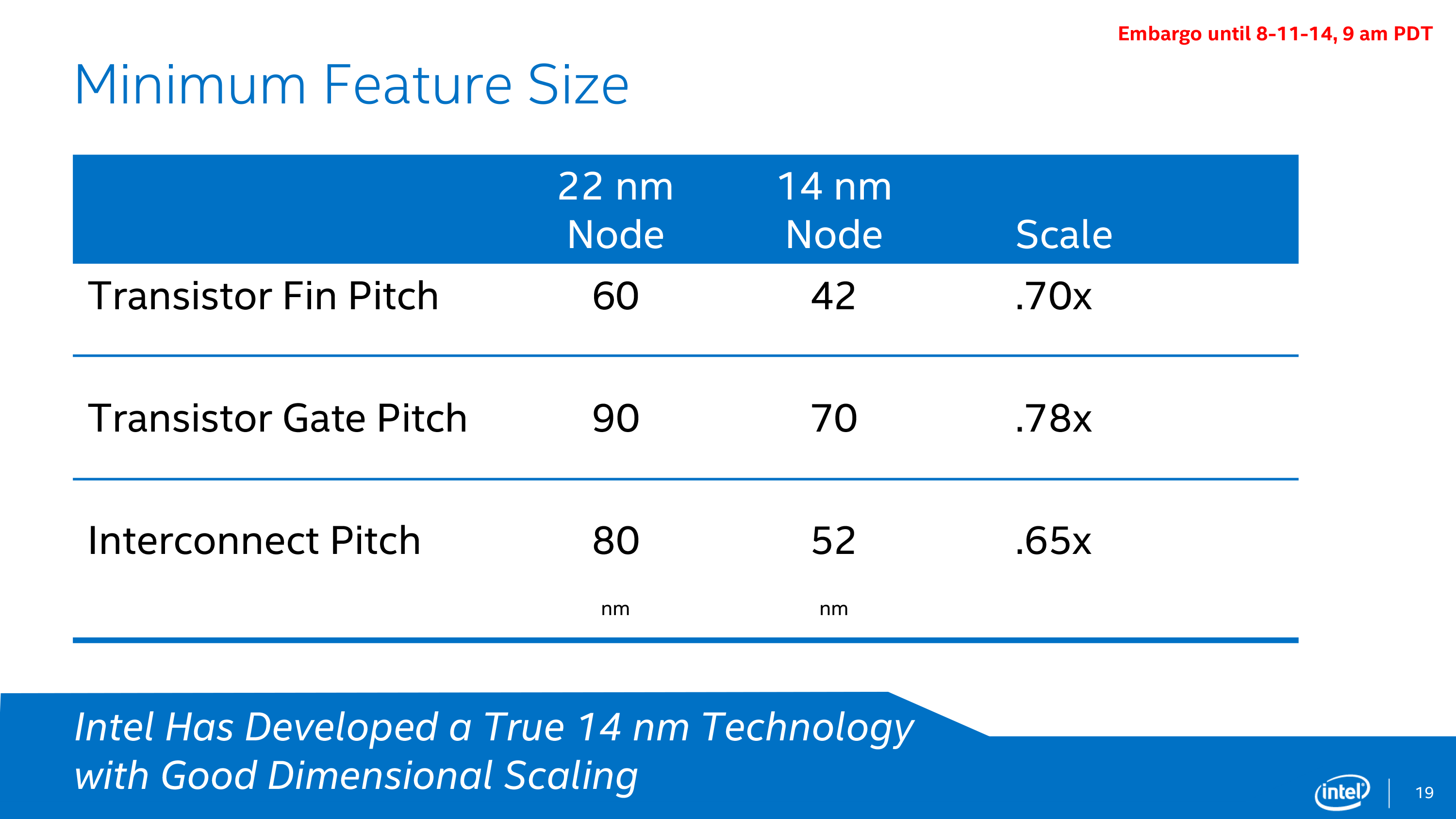
Yeah overall feature size isn't 1 to 1 with the "process" anymore, hasn't been there for a long time.
All of them use various sub-wavelength techniques like using multiple stencils and masks to create aperture / fresnel lense like effects etc.
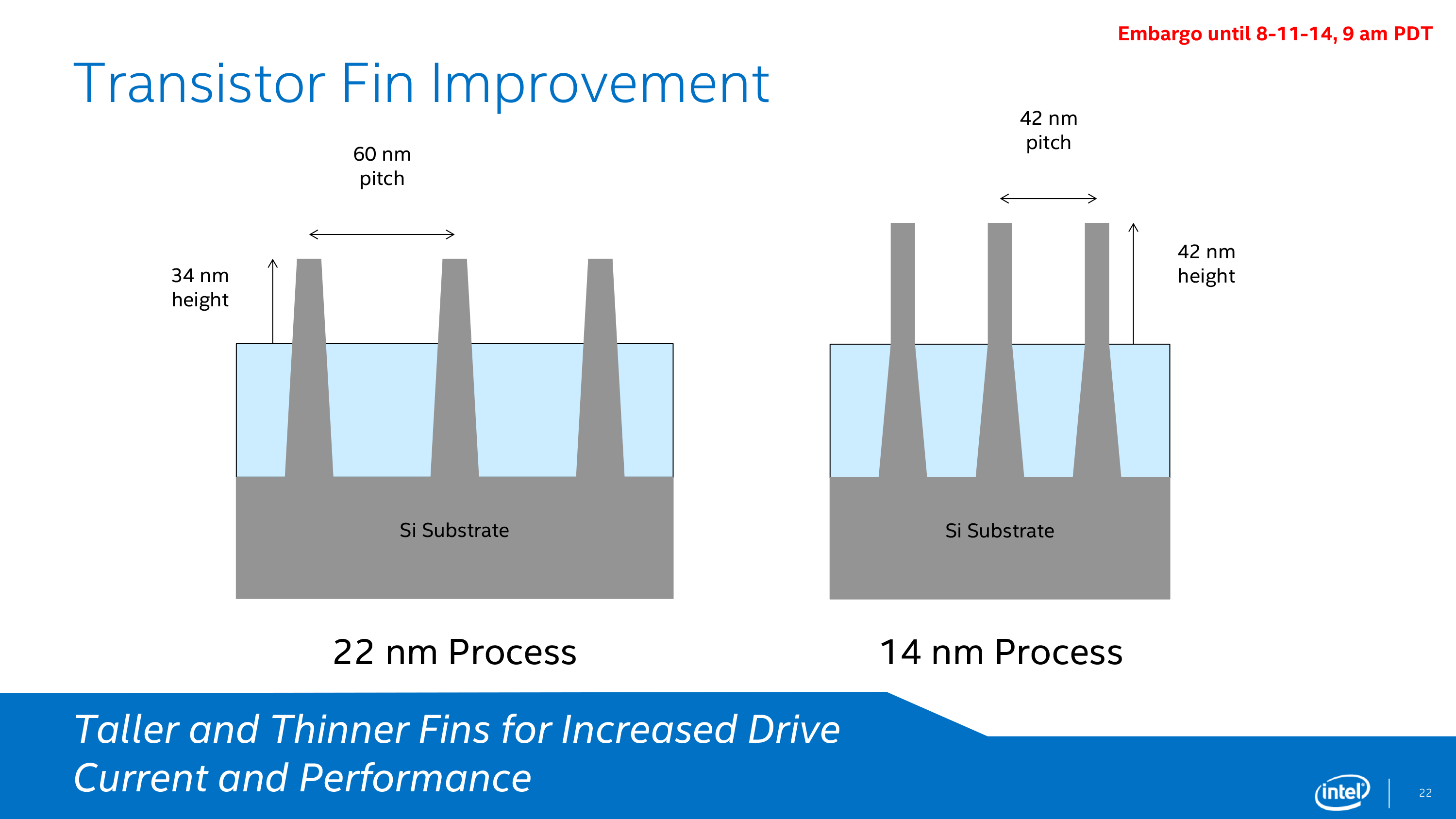
Pretty much since you have multiple measurements for "feature size" like fin, gate, interconnect pitch etc. companies are just naming their process roadmap to show "progress".
I don't think even Intel's 14nm process actually has a 14nm "feature size" and if it does I don't know what measurement they are basing it on.


Intel's Xeon Phi experiment hasn't produced anything cost-effective and workable yet, but if they can get that to run at low power they might have an answer to the swarms of ARM systems on the horizon.