As someone who would want to be a vegan but struggles not to eat meat, I've been very interested in Impossible since it started. The idea that you might make synthetic meat that tastes as good as real meat while being cheaper is very alluring -- seemingly, you could eliminate most meat consumption globally.
At the same time, over the past few years, I've explored more of the world's cuisines and generally become a better cook. What I've learned (which surely is obvious to many but was not obvious to me) is that the typical US diet is unnecessarily meat centric, and that being a vegetarian is much easier, healthier, and tastier when one basically stops eating typical American meals. Being a vegetarian is much easier when eating Indian food for instance, and it's laughably easy when eating Ethiopian.
I'm still rooting heavily for Impossible, because factory farming is a global atrocity. And, it would be really cool if one day, I could eat an Impossible burger that was cheaper and healthier than a regular burger. But for now, and for the foreseeable future, I think that my attempts to be vegetarian will revolve around learning to better cook food from non-American cuisines, foods that are better suited to not having meat.
Something I’ve noticed about being vegan is the way the meals change. In a lot of American meat based meals, the meat is the center piece and everything else is peripheral. In a well made vegan meal, there is often no specific center piece. Instead, you get a multitude of flavors that all work together in complex ways. It can be really wonderful. I’d encourage anyone who eats meat every day to consider experimenting with periodic meat free days. I used to eat meat almost every meal but I’ve now quit entirely. I almost never eat meat substitutes but instead eat meals with a mixture of foods that all work together. It’s really lovely!
I’m not a fan of meat substitutes like impossible or beyond, but tofu, seitan, and (occasionally) tempeh are awesome and easy to cook up. I agree with you that a vegan meal generally doesn’t have a centerpiece food item, and that the complexity of flavor more than makes up for it.
The problem with meat substitutes and alternative meat dishes (i.e black bean or beet burgers, or tempeh
“bacon”, etc.) is that no matter what, it’s not going to taste like what you’re expecting. I’m often happier eating vegan recipes that make no attempt to replace meat.
I agree. The issue once you actually stop eating meat isn't "find something that tastes and feels like meat," it's "find something with the protein content of meat." I need concentrated blocks of protein so I can eat something besides lentils and still hit my targets.
I mostly eat plant based and tempeh, seitan, and tofu are great to keep my macros on point. I don't miss the "experience" of eating meat, but I do miss how cheap and easy it was to find a lot of protein. Now if I'm not eating home cooked meals, I mostly resign myself to supplementation with protein bars (like No Cow) or powder.
Where the stuff like Impossible and Beyond helps me is when eating out. I'd rather at least have the option for a veggie burger than not having anything but a side salad or a Portobello sandwich. I've thought it strange that more fast food joints don't sell them.
I have a vitamix blender and every day I make smoothies with carrots, oat milk, protein powder, PB2, ground flax seeds, and frozen fruit mix. Apart from that I really never think about protein. My understanding is that our meat-centric culture focuses too much on protein, and if you eat a good amount of veggies you will get a fair bit of protein as it is. But protein powder in a smoothie is great.
> In a well made vegan meal, there is often no specific center piece. Instead, you get a multitude of flavors that all work together in complex ways
Yep. That's what I have been finding out recently as well. The vegan 'meat alternatives' should be considered full-fledged dishes with their own excellent flavor themselves. Since its much easier to balance different flavors because the overriding flavor of the meat/protein is less in plant based protein.
None of the vegan 'meat alternatives' strike me as healthy though. It's all full of seed oils, corn/sugar, and soy protein. Meat is actually healthier.
> I’d encourage anyone who eats meat every day to consider experimenting with periodic meat free days.
I don't mind not having meat, but I'm not very good about eating vegetables. I'm a supertaster with a diet that learns towards childish. Most spices and bitter veggies are out, so it's difficult to find vegetarian or vegan dishes
I can tolerate. All the vegans and vegetarians I know love these crazy spicy foods and I'm over here avoiding certain brands of gum and toothpaste because they're too much for me.
Meat free days for me would likely end up being full of pasta, fruits, nuts, or even something like PB&J or French toast!
It's a shame people are downvoting you. I'm not here to tell everyone they have to be vegan. I think if you were raised in a vegan-friendly culture, you probably would have found foods you enjoy. And perhaps you could still do that now. But something I've learned is that some people I know were vegan for years and ultimately felt like their body couldn't really deal with it, and they had to go back to eating meat, eggs, and dairy. Between a doctor, a nutritionist, and a chef, could they figure out what that person needed to stay vegan? I think the answer is probably yes, though I don't know for sure. But can we expect every person to be able to do all that while dealing with all the complexities of everything else life throws at us? No I don't think so. I do have a lot of moral qualms with animal agriculture, but it's not on every person raised in a meat-centric culture to solve. If more and more people try veganism, eventually we will all have an easier time converting. And I don't blame anyone in the here and now who isn't in a good place to do it.
Animal agriculture bothers me too, so I'll keep trying new things and see if I can't expand my dietary horizons, but lab grown meat can't come fast enough. If fake meat gets as close to the real thing without cows as brave robot ice cream managed I think that'll be the end of the meat industry as we know it.
It’s also why it’s really hard to go vegan. You can’t substitute 1 ingredient you need to abandon the way you cooked before and take a completely new approach to your meals
It's true, it was pretty hard for me to go vegan. Those who do go vegan though do help pave the way for others, as knowledge of good plant based foods spreads through our culture. And meat substitutes are fantastic for fledgling vegans!
This is a good question, but I don't work well with cookbooks. They tend to sit on my shelf closed. I learned by experimentation. I do know of one cookbook because I heard an interview with the author on the radio, called "Decolonize your diet" about traditional indigenous recipes from Mexico before the Spanish arrived and made everything about meat. The authors deserve support but for the curious it is also on library genesis.
But I do a combination of looking online at vegan recipes and experimenting with stuff on my own. I make a lentil sweet potato curry that is really filling and delicious. Here is my recipe copied from a tweet I made about it:
Large onion, chopped. ‘Sautee’ in water until partially clear. Add minced garlic and ginger paste. Sauté 2 more mins. Add curry powder, turmeric, any other spices, salt, pepper. Add can chopped tomatoes, 2-3 cups oat milk, 1.5 cup washed lentils, Add chopped large sweet potato, add a can of garbanzo beans, add a small can of chopped mushrooms (drained). Serve with brown rice. Can add raisins and nutritional yeast. Can get a sweet crunch adding candied nuts.
You can also look for vegan or vegetarian restaurants in your area and try them, see what you like, and try to work with those foods. And look for different cultures like Indian food that focus on more vegetarian meals.
I'm not Vegan, but I do own The Veganomicon from which I've liked several dishes (I don't have it handy, but there are some great chickpea dishes in there).
Big fan of Dr. Michael Greger's "The How Not To Die Cookbook" and "The How Not To Diet Cookbook". His focus is much more on the health aspects and emphasize a balanced whole food plant-based diet. My partner got the latter because she wanted to lose some weight. I was skeptical but the recipes also happen to just be really good and not overly complicated or time-consuming. My only complaint is that he tends to go a bit light on the spices; if you like spicy food, don't be afraid to just double them.
Otherwise, we really like "Isa Does it". Not quite as health focused, but overall tasty and simple.
Then, I like "Dirty Vegan" by Matt Pritchard because you can't be healthy all the time.
Try Simple by Yotam Ottolenghi. He's known for complex, Middle eastern influenced cuisine, but this book has a lot of stripped down recipes that you can put together easily and quickly.
I will respectfully disagree, and at risk of downvotes, I think food science is a very difficult field due to difficulty getting good cohorts. Vegetarians and vegans tend to be very health conscience, but often studies lump "meat eaters" in with the same group who have a diet of highly processed foods and fast food.
I would also disagree most diets are "unnecessarily meat centric". Getting adequate amounts of protein is incredibly important and is very hard to get that as a vegan/vegetarian. It is of course possible, but would take conscious work most people would not take. I would bet most vegans have inadequate protein consumption.
Lastly, Impossible burgers are NOT good for you. They are highly processed junk food. Take a look at the ingredients. Full of seed oils and other things that are simply not good for you.
In summary, I don't claim to know all the answers, but I'm betting on a real food diet of meat, eggs, and vegetables. I shun processed foods 98% of the time and things with added sugar. I don't think it is terribly obvious what is the "best diet" and there are several conflicting studies, but eating a "real food" diet mostly avoiding "food product" strikes me as a reasonable bet.
People say "it's hard to get adequate amounts of protein" as a vegetarian/vegan, but really people don't need the hundreds of grams of protein a day a typical meat eater gets. Just 50-60 grams a day is fine even by the USDA (which if anything has been criticized as being beholden to the US meat and dairy industries and as such that estimate is if anything an overestimate). It's really not that hard to get 50-60 grams of protein from non-animal sources without even trying.
What are these meat eaters consuming that’s giving them hundreds of grams of protein per day? A 14oz ribeye is only 98 grams of protein and I hardly think typical meat eaters are consuming those for every meal.
Only? That is one meal. Many eat three meals and snacks. Very easy to hit 150g of protein in a day consuming meat. There is a good comment below on the breakdowns.
Everything. To start, the term "meat eater" is not only stupid, but also deliberately deceitful. People that eat meat eat also vegetables, legumes, fish, eggs, milk and a diet that is as much wider as they want.
There is not such thing as hypercarnivore humans that eat only meat and water.
The correct term is omnivore. If vegans want to be taken seriously, they must start talking seriously and don't rely on cheap tricks.
"Meat eater" just means "someone who eats meat". You really are reading too much into this expression. There's nothing in it that says that you eat meat exclusively. You are also a computer user, but that does not prevent you from using a knife, or any other tool.
You should not find the expression "meat eater" offensive, unless you somehow find that eating meat is wrong in some kind of way (in which case, do yourself a favor, do something to solve the discrepancy). There's nothing deceitful in "meat eater", it actually cannot get clearer. It also does not bear any judgement. Of course, that does not mean a vegetarian won't judge you, but this won't be conveyed by using this expression alone ("You damn meat eater" would of course be very different in this respect).
> The correct term is omnivore
"An omnivore is an animal that has the ability to eat and survive on both plant and animal matter" [1]. Omnivore is not "eats meat and plant matters", it is "can eat meat and plant matters" (biologically speaking). Which applies to vegetarian.
"Omnivore" relates to a species and is not really adequate to qualify an individual / is ambiguous.
Also, on a personal note, I hope that you are not waiting for vegans to prepare you a professional presentation and "look serious" for you to think about the topic. I think they should make sure to give a good impression, but that's not their job. You do you. The topic is highly documented at this point in all the directions you could imagine.
Research papers use the term omnivorous diet. Language always has multiple aspect to it, including if an expression is neutral, negative or positive. If one wanted to use a slightly negative version of omnivorous diet they call it meat eater, and if they want a slightly negative version of a vegetarian diet they call it bunny food.
The title is: Comparison of nutritional quality of the vegan, vegetarian, semi-vegetarian, pesco-vegetarian and omnivorous diet.
The word vegetarian was created in 1847 by a British society club in order to promote a specific way of living, one with a strong connection to the temperance movement and a sect of the Christian church.
> one with a strong connection to the temperance movement and a sect of the Christian church.
Appeared in 1839 [1], popularized in 1847 by the Vegetarian Society [2] apparently. Do you have a source for the sect thing? Anyway, this would not reflect today's reality.
> There is not such thing as hypercarnivore humans that eat only meat and water.
Not true. Look up "lion diet", "carnivore diet", and the like. Tons of anecdotal reports that people with hard-to-treat autoimmune diseases are benefitting. Yes, I know "anecdotal"; I emphasized it already. Might be bunk. I don't care either way. But it is a growing movement.
Ok, not a common case, but far point. That would the real opposite then. When people talks about vegetarian versus "meat eaters" don't use it in this sense normally. Is often used by vegetarians as a synonym of fast food diet or "Mcdonalds diet" or "extreme obesity diet". They often flag this red-meat herring, and this is not really fair.
And then we are told that vegetarian diet is more healthy because X,Y and Z good stuff coming in plants A,B & C. But they forget to notice that omnivores receive exactly the same healthy benefits from exactly the same ingredients in their diets, because they also eat A,B and C. Plus the proven benefits that came from eating meat, fish or eggs.
> There is not such thing as hypercarnivore humans that eat only meat and water.
Rubbish. I'm not trying to be rude. This is an ignorant idea that needs to stop being parroted. Plenty of people can and do subsist on meat and water. Skeletal muscle from cattle alone has everything one needs to thrive. A normal and healthy human can eat nothing but meat (possibly not even water directly) and remain healthy.
Go talk to some "carnivores." Yes, there are crazies as there are with every single group of humans, including vegans. You will find that there are individuals who have eaten solely meat for years and have not suffered a single issue that most non-carnivores believe will happen.
> Skeletal muscle from cattle alone has everything one needs to thrive. A normal and healthy human can eat nothing but meat and remain healthy.
Red meat don't has two essential omega-3 and omega-6 fatty acids that we need to survive. If they are frying their meat in vegetable oil to avoid that, sorry, but they aren't eating just meat. They are eating plants also
I'd be happy to agree that I'm doubtful this is the best way to get your nutrients, but what omega-3 and omega-6 fatty acids are you talking about? Red meat definitely does contain omega-3 and omega-6 fatty acids generally. This is one of the reasons to prefer grass vs grain fed beef - the former has a much better omega-6 to omega-3 ratio.
> The error is to consider them as ESSENTIAL. Which obviously they arent.
Not, the error is dismissing all proven facts in nutrition and thinking that we know better.
When something is called an essential nutrient, we need to include it in our diet if we want to remain alive. Is a simple as this.
Lets forget about the special fatty acids that we need and go with an easier example. Your bold claim that "Skeletal muscle from cattle alone has everything one needs to thrive" would led us directly to die by scurvy.
Muscle is not a reliable source of ascorbic acid, and we need it to manage correctly our urea metabolism. So we need to add a source of Vitamin C, that comes typically in fruits. Yes, can be found also in liver of some animals, but liver is not skeletal muscle, so your previous claim is incorrect.
About the omega-3 and omega-6; a source of fatty acids on this types are needed to avoid:
stunted grow
damage in the nervous system and mental disease
Premature death of cells in chilling weather. Freeze damage.
Feminisation in males by absence of testosterone (related with the former point)
Being much more prone to die by heart attack
Looks pretty serious stuff to me. Even if your diet is based in lard, either you include some omega-3 and omega-6 or you will have fat deficiencies at middle term, and the brain is fat.
> Muscle is not a reliable source of ascorbic acid, and we need it to manage correctly our urea metabolism.
Let's be clear, firstly... I think we should stick to talking about the skeletal muscle of animals that our ancestors primarily adapted towards, which would be large ruminants (aka red meat with legs). I can't comment on a hypothetical animal that lacks vitamin C in its tissue.
What you're saying simply isn't true. There is enough vitamin C in meat, and the idea that you need to eat liver to get enough of any vitamin is largely mythical. But let's stick with vitamin C.
The human body needs very little vitamin C, and orders of magnitude less so on a diet of meat. Vitamin C and glucose both depend on the insulin pathway to enter cells, thus they "compete" to do so. With even a modest amount of exogenous carbs, glucose out-competes vitamin C for update because it has a greater affinity for the GLUT-1 receptor. Thus, one would need a lot more vitamin C on such a diet. Without exogenous carbohydrates, skeletal muscle provides plenty of vitamin C.
We all know that hard tack was once a staple on sailing ships, and that those who subsisted on hard tack too long were prone to scurvy. What people either forget or weren't taught is that not all sailors were eating hard tack on any given ship; the captain and his officers were more likely to be eating dried or cured meat, meaning the prevalence of scurvy was far greater among the regular crewmen who were receiving the lesser food.
> Your bold claim that "Skeletal muscle from cattle alone has everything one needs to thrive" would led us directly to die by scurvy.
Completely false. It takes as little as a month to develop scurvy, yet there are many people who have been eating meat exclusively for years and none of them have scurvy. When should they expect to get scurvy? After a year? 5 years? 10 years? I myself have experience with this and, well, it's been far, far longer than a month... still no scurvy. I don't eat liver. Never have and have no desire to start doing so.
> Muscle is not a reliable source of ascorbic acid
Again, not correct. A meat based diet requires substantially less vitamin C.
> So we need to add a source of Vitamin C, that comes typically in fruits.
No, you don't need to add fruit if you're eating a diet solely of meat.
> Yes, can be found also in liver of some animals
Yet many carnivorous animals, including humans historically, don't bother with the liver under most circumstances. Liver can have benefits, but eating liver too often or in too great a quantity can lead to types of poisoning and electrolyte imbalance.
> but liver is not skeletal muscle, so your previous claim is incorrect.
Yeah, it's not, which is why carnivorous animals consume mostly skeletal muscle and don't just eat the liver, despite how some think that liver is a cornucopia of health. Liver is not a cure for anything, except perhaps carbohydrate-induced scurvy.
> so your previous claim is incorrect.
Not really. It's quite correct. You really should reevaluate your view of vitamin C in the human diet.
As far as I am aware, no studies have been performed to determine how much vitamin C (ascorbate, specifically) is destroyed when cooking something like a steak. There are studies on vegetables, but cooking meat is a different dynamic and I don't think one can be inferred from the other directly.
My best guess is that, given that most people don't want their steak totally well-done (an oxymoron really), so enough aspartate survives. The more you heat your steak and for longer, the more the aspartate breaks down. Besides a few frankly questionable incidences like the notable James Blunt (which we don't actually know the cause of), the vast majority of carnivore dieters cook their meat and don't report scurvy. Out of the currently 47k members of the r/carnivore subreddit, none have made any posts saying they got scurvy. Yes, that's a very imperfect metric, but it's better than nothing. If vitamin C was a big deal, I think there'd be many more reports of serious issues. In the ketogenic diet community, countless people complain of side effects such as "keto flu", so I don't think people who are trying to eat mainly meat are all faking that they don't have scurvy.
As I said elsewhere, I have eaten mostly meat for years and have been eating 99% meat for most of this last year. Still no scurvy. My gums don't bleed and my teeth don't wiggle. In fact my gums bled more when I was eating closer to a standard diet. Now they don't bleed at all and they're rather firm.
Also, there's the possibility of eating meat raw or mostly raw. This of course depends on the meat. Beef is typically very safe to eat in a raw state given that it has either been butchered in a way specifically to be eaten raw or seared on the outside where bacteria colonize (aka "blue steak"). I have switched to just searing my steaks, leaving the majority of the center raw, and I'm not going back. This preserves the ascorbate and also the taurine. But I actually prefer the taste and texture.
The reason that beef has very diminished risk profile in contrast to something like chicken is that cows are given feed that isn't contaminated or prone to parasites, and modern regulation has made it so that meat plants must eliminate the 5 or so major forms of deadly bacteria from their process. Even raw ground beef is fairly low risk these days, though I don't recommend it.
By the way, I'm not actually here to advocate for a meat-only diet. I make sure not to command anyone. Life as a modern human is about being able to enjoy other things besides meat. What I take issue with is fake news discouraging people from even considering having meat more than a few times a week, of which there is an overabundance.
What many people don’t do or know is that you don’t have to eat meat everyday. In fact once or twice a week is more than enough, unless you have a super strenuous physical job.
That’s the best of both worlds without going all polarized for/against meat.
Getting good meat sources (aka not from Brazil for instance) is a great second choice one can consciously make.
As a matter of fact the "original" Mediterranean diet (i.e. what people actually ate in countries like Italy or Greece) rarely included meat more than once or twice per week (but not being actualy vegetarian or vegan it did include fish, eggs, cheese).
The advice that I've gotten from my doctor is five to seven portions of meat at spread over at least two days per week. So yes, you don't need to eat it every day, but you still need to eat a good amount. And it may just be simpler to eat 3 to 4 ounces of chicken each day with something else than to track how often you're eating 2-3x that much over two days in the week.
I am not going to argue with what a doctor advises you, but I am going to say it must be personal. Lots of people live their whole lives without eating meat and do fine. Anyway, the take away is that a lot less is probably fine for you if you are the typical meat eater 7x a week.
They do fine ? More than Half american is diabetic... 93% of US citizen has metabolic disorder, ...40% of western world is diabetic But they do fine. :)
Brazil is the world largest exporter of beef (mostly to the US) and it costs huge swathes of land, killing the rainforest plus more methane in the atmosphere. So it’s a double whammy when it comes to environmental costs. And lets not start talking about the main company behind it, feel free to research that.
India's beef exports are primarily buffalo meat ("carabeef"), not cow meat. In addition, there are states in India where slaughtering cows is permitted.
It costs all of that to make coca-cola, too. Can we get rid of soda before we get rid of our meat, please? I'm not going to eat bugs, but you can go right ahead.
I think you’re right that lumping anyone that eats meat at all into one big group hides the diversity there. It’s completely reasonable to eat a healthy diet with meat in it (lean chicken, fish, occasional beef, good sources of fiber and healthier fats, etc). It’s also possible to have a vegetarian diet that’s unhealthy. When I switched to being vegetarian my diet was very carb and cheese heavy at first.
I don’t think people considering leaning vegetarian/vegan should worry about getting enough protein. Protein deficiency is rare and just including eggs and dairy in your diet is really enough to not worry about it. If you’re bodybuilding, sure, you need to supplement, but that’s true for a meat diet as well. Many millions people lead healthy lives without meat protein and without keeping track of anything. I think people curious should try a meat-free day or two a week and see how they feel. I was skeptical (growing up where every meal had a serving of meat) but it’s really not an issue.
Full vegans need to make sure they’re getting the full range of protein types but it’s pretty easy if you have a diverse diet of grains, legumes, nuts, and other protein-rich foods. Basically don’t go in thinking vegan == “I only eat lettuce”! There’s lots of great, filling, protein-rich vegan food out there. Even a few vegan/veggie meals a week is a good thing.
100% agree impossible burgers are not good for you. Like real burgers they’re fine in moderation. My personal love for an impossible burger is that it satisfies a craving without causing harm to an animal. It doesn’t even need to be as good, just good enough to keep me from getting beef.
The big difference is you actually have to actually pay attention to your protein intake. If you just eat meat all the time, you can be pretty confident you'll get enough protein with maybe a tiny bit of supplementation. Convenience, in a word.
Seems like a weird comparison though since you’re comparing a diet that is defined by its incidental protein source (meat-eaters) vs one that is not and then suggesting that it’s more convenient to already be in the group that incidentally consumes protein. It’s begging the question.
All a vegan has to do is include any protein source in their diet, like become a bean eater.
> I think everyone should consume around 75g daily (I should add: as an absolute minimum)
You ought not to give advice based on your personal pet theories (no offence implied). The daily protein requirements vary for different people (in what is generally considered as «healthy» population – as in not having specific metabolic disorders), and those requirements depends on a few important metrics: the daily energy expenditure and energy expenditure patterns. Different people also have varying complexions – more on that below.
A person who engages in regular strenuous weight-lifting, body building or physical labour will have increased daily protein requirements to retain or to build up a muscle mass. A person adhering to a modern urban lifestyle (as in: commuting to and from work, running errands, light walking etc) will not require the same amount of protein as the former group.
Now, human bodies are self-regulating molucule cleaving machineries, and they will process protein according to their needs as per the body's own feedback loop. In complete protein, only 2x amino acids are ketogenic with the rest being glucogenic yielding a ketone or a glucose molecule during the digestion, respectively. Since the body can't store protein, for any excess amount of protein that has not been used for the muscle tissue growth or «maintenance», the body will cleave the amino group and remove it via kidneys whereas the cleaved glucose from the glucogenic amino acids will be eventually sent into the adipose tissue and deposited there as pure fat.
The current consensus is that daily protein requirements are in the 0.7g ÷ 1g of protein per 1kg of the body weight range (although the jury is still out on the exact ratio).
Therefore, your advice to consume at least 75g of protein daily for a person who does not engage in any strenuous physical activities and is 165 cm tall and 55 kg of weight (and the number of such people is significant across the human population) will result only in one thing: them getting fat. Which is why the unnecessary over-consumption of protein is just as counterproductive as overconsuming any other calorie dense foodstuffs. Also, as the metabolism rate slows down with the age, continuing to over-consume protein will result in such people getting obese and acquiring further secondary health disorders.
This is also why many bodybuilders who stop excercising later in their life become either fat or overweight fairly quickly: you can beat the laws of biochemistry.
The issue with the PB&J is that it's > 700 calories (440 just from the PB, call it 100 for a TBSP of jelly, probably 100-200 for the bread), whereas a grilled chicken breast might give you 30 G of protein with maybe 250 calories. If you were getting 150G of protein from PB alone, you would have to eat ~3.5k calories.
Some more data points:
* 150 g of protein from lentils: 1.9k
* 150 g of protein from chickpeas: 2.9k
* 150 g of protein from grilled chicken breast: 750
* 150 g of protein from whey powder: 675
* 150 g of protein from egg whites: 640
My experience is that I don't need to worry much about "getting meat in" when I'm bulking up, but when I'm cutting calories to lose weight (and trying to keep protein extra high in order to maintain lean mass/increase satiety -- I'll have as much as 200-230g per day on maybe 2400 total calories), it's really tough to hit without having a lot of lean meat in my diet.
I do cut calories (I bulk at maybe 3500 and cut at maybe 2500), I'm mostly saying that I find it much easier to feel full on a very high protein diet. I also believe there is some research suggesting that you should err on the higher side of the acceptable range when in a deficit. I would be nervous eating 150 G of protein in an extended deficit, weighing ~175 lbs.
I think the point being made is about the "density" of protein per serving. Sure you can get 75 from PB but that would also give you diabetes, and excessive fat too.
Same goes for plans, yes in powder form it's a few scoops but you probably would be way too stuffed if you eat the actual veggies.
On the other hand, 95% of Americans don’t eat enough fiber, which means they aren’t getting any of the other benefits of plants like vitamins and antioxidants.
I’d wager that’s much more important than the average muscleless flaboid getting 150g protein.
This is misleading, and demonstrated the complexities of meeting protein goals. Peanuts are not a complete protein [1]. If you ate 1kg of peanut protein a day, you would still be deficient.
I don’t get it. Even Google’s blurb for “are peanuts complete protein” points out that they are a complete source. Putting peanuts into Cronometer (nutrient tracker) also confirms they have all 8 essentials.
Yeah, the complete protein thing is bunk. Most plants are "complete" but can be low in something. Eating more than one kind of plant is all your need to counter that - so a peanut butter sandwich should do the job.
The sad truth is, though, that you'd end up with too many calories if you try to get all your protein from peanut butter sandwiches (unless you do some cardio to cancel it out).
For what it's worth, there are some pretty decent "New American" recipes too, for lack of a better word. They are often vaguely inspired by ethnic fusion foods and then modified both for Americanness (more sugar, less spice, familiar seasonings, etc.) and vegetarianness. But they include everything from sandwiches to lasagnas to pot pies to chicken strips to meat loaves to chicken-fried steak to burritos to grain bowls and salads.
Only very rarely do they use mock meats, but tofu, seitan (concentrated wheat protein), legumes/beans, and jackfruit are common. The trick, as you noticed, is to make the meal tasty as itself, not to make it pretend to be meat.
You don't have to give up meat to enjoy those dishes once in a while, or as a side.
If you eat out often, the HappyCow app is specifically for finding restaurants with good veggie options. It's free and super helpful whether you're in your home town or traveling.
If you want to cook, there are a ton of purpose made vegan cookbooks. I personally like the quick and easy ones that emphasize meals under 20 minutes, vs the super fancy ones that take forever.
> meat that tastes as good as real meat while being cheaper is very alluring
Interestingly, it seems that every time I see an Impossible burger on a menu, it's not cheaper. Often it's more expensive, but usually roughly the same price. I'm not sure why this is, but it seems like it's probably holding folks back from eating it regularly.
I am really not that knowledgeable about this space, but I would imagine it's because A) there are a lot of subsidies for the meat industry, and B) there are a lot of economies of scale present in the meat industry that do not yet exist in alternative meat industries.
Of course, it makes sense that when introducing a new product like this to the market, it is potentially going to be more expensive than existing products. It seems like, in theory, one should be able to make it much cheaper just because producing meat by way of animals is just very wasteful from an energy perspective. However, I have no clue what is required to synthesize such compounds without the use of animals, so I don't know how far away we are from being able to do this.
It just takes time to tilt the economies of scale. For soy milk it took 10 years from niche appearance in supermarkets to being cheaper than real milk.
I checked Kroger's website, which had some strange problems. You can't sort by lowest price and there are approximately 2.5k results for "milk". The "dietary preferences" filter does not include "lactose intolerant" or anything equivalent for milk alternatives, despite all milk alternatives being in the search results. The only one that looked genuinely useful (but not for me) was "Gluten free".
That being said, I did a price check and found that soy milk was not cheaper than regular milk. Kroger milk is $3.29 for 1gal and soymilk is $2.59 for 0.5gal.
As someone who doesn't eat meat, I prefer not to have fake meat. I'll often just pass on eating anything if fake meat is the only non-meat option.
A stir fry with rice or veggie fajitas (could be just peppers and onions) with Mexican tortillas possibly with a side of beans would be much preferable, and cost nearly nothing. Adjust for regional tastes.
Easy to justify when it is something that can be a main dish for the non-meat eaters and a side dish for the meat eaters. But, if people are serving themselves, the non-meat item should be earlier on the table / separated from the meat, so meat eaters do not contaminate it with meat (common).
Fake meat is a nice option for meat eaters who are trying to reduce their consumption of meat for $reason(s), but still crave meat. But, for folks like me who do not eat meat nor have any inclination to do so, it is kinda weird.
I was a vegetarian for 40 years. I could never understand why people go vegetarian and then... eat fake meat? WTF? There are zillions of awesome vegetarian dishes in this beautiful culinary world.
Because they enjoy the taste and/or it's something very familiar and comforting to them; it's not at all difficult to understand.
Especially if someone is new to vegetarian food and don't know what those "zillions of awesome vegetarian dishes" even are, let alone how to prepare them.
It's like trying to replace Champagne with alcohol free champagne when you can get any of the other hundreds of cheaper non alcoholic drinks and complaining it's expensive
The problem isn't bing vegetarian/vegan, the problem is that people have absolutely no education when it comes to nutrition
Maybe it's for the same reason cinema ticket prices are the same for every movie. Price is a (often inaccurate) signal of quality. By lowering the price you are saying this product is inferior.
On the other hand it could be because if restaurants have a similar product at a lower price, then customers might go for the cheaper option, thus reducing overall profits.
It's more expensive because the cost of meat is heavily, heavily subsidized by the government (at least in the US). The actual cost to produce meat is much higher than Impossible or Beyond [1].
> The United States federal government spends $38 billion every year subsidizing the meat and dairy industries. Research from 2015 shows this subsidization reduces the price of Big Macs from $13 to $5 and the price of a pound of hamburger meat from $30 to the $5 we see today.
$38 billion is $100 per person. People eat a lot more than 4 pounds of meat per year, so this doesn’t compute, or it’s singling out some category of hamburger meat, while ignoring all others.
Average meat consumption per person is 260 pounds, which would come out to about 40 cents per pound in subsidy.
They gave the cost of two beef products before and after subsidies. There are a bunch of other types of meat that presumably are not as expensive per pound. According to this article, less than 1/3 of Americans' meat consumption is beef [1].
I don't know what the factors are, but there might be some reason in particular ground beef ends up taking a large share of the subsidies. I know what steak at the grocery store is quite expensive compared to ground beef, so maybe ground beef is targeted so lower income people can afford it while steak is not. Who knows. It would take more than napkin math to convince me that they're lying.
And it is given without a citation, and the document's authors are Directors/R&D/Tech Lead people at Samsung, VMWare, and Google.
And: "This paper was created in an open classroom environment as part of a program within the Sutardja Center for Entrepreneurship & Technology"
So it's just laundered fake research.
The source of such a figure is surely going to be some reasoning like this, plus inflation, which cites the vast majority of "subsidy" being "healthcare costs":
But without looking at the source, napkin math tells you at the very least the number is way out of whack, and at best it'd have been cherry-picked for the purpose of deception.
As far as I've read, and I am not a doctor (although am married to one), it's the lack of fiber and huge amounts of sugar and salt that contributes to most of the health issues we North Americans face. Meat-replacements though are more about environmental causes (as this article points out). I think they would do tremendously better if they could argue that they were healthier options too.
The milk-replacements are even worse in this regard. Oat milk seems healthier than cows milk somehow, until you realize it has 50% more sugar, twice the carbs, half the protein, and fewer nutrients. I really don't understand how alternative milks have positioned themselves as healthy and artificial meat somehow has not.
There are brands of Oat Milk that are better than others. I usually drink soy, but sometimes I want an oat milk latte and I find I have to ask the barista exactly what brand they’re using.
At home I just use Elmhurst plant milks, which function fine as a base. Then again, this brand works for me because I’ve never used milk as a nutrient source - it’s just a flavor or texture.
As someone who's been strictly keto for over a decade, it would be difficult for me to maintain my macros without meat, or a close substitute. (I would mirror nu11ptr's comments[1] as well.) As someone who finds mass murder and exploitation of other animals distasteful, I'm also constantly on the lookout for realistic alternatives.
For a while, I really tried to make Beyond Meat work. I wasn't thrilled about introducing a highly processed food filled with low-quality fat (canola oil) as a daily staple, but the macros weren't terrible (although far from ideal).
It worked for a few months, but one day it was like a switch had suddenly flipped in my head, and even the smell of cooking it was enough to make me gag. I haven't been able to stomach it ever since. Impossible is probably more workable in that regard, but the macros are even worse, it's also highly processed (arguably more so), and I'd be skeptical of using soy as my majority protein source due to the phytoestrogens.
All that being said, I recently got a chance to try a "chicken cutlet" from Meati[2]. I would highly recommend it to anyone who isn't allergic. Summary:
* Rather than imitating ground meats, they sell fake steaks and chicken cutlets.
* Rather than a highly processed blend of ingredients, it's a whole food — just a particular species of mycelium (what they're branding as "mushroom root"), grown in molds to fit certain shapes then flavored and pressed to remove water.
* Complete protein, 0g net carbs, good variety of (naturally occurring) micronutrients. If this matters to you, it's also low-fat.
If I hadn't known otherwise, I would've assumed it was just a lean cut of chicken that had been marinated in some sort of mushroom sauce, and I'm saying this as someone who eats actual meat on a daily basis.
From my perspective, Meati seems like the holy grail. It's good enough to convince me that cultured meat may turn out to be redundant. The current supply is too limited to use as a daily staple, but it's going to become my go-to protein as soon as they finish scaling up production.
Canola oil is basically fine, but it wouldn't be my first choice. As I said, I was willing to tolerate ingesting significant quantities of it on a daily basis.
When I refer to it as low-quality, I mean by comparison to my preferred fats (olive oil, coconut oil, grass-fed butter, animal fats).
I think it gets an undeservedly bad reputation due to conflation with Mazola (corn oil), which is 59% PUFA. Canola is 28% PUFA. It's not a high-quality fat, but it's far from the worst.
Frankly this is misinformation; when people say "seed oils" they don't mean canola oil. Yes, it's a seed oil. Words sometimes have complex connotations.
Do you ever consider getting meat from a humane farm? To me that's as fair a solution as I can find. Especially understanding that during plant harvests thousands of small animals can be killed or greviously wounded.
I have bought meat at farmers markets, and make more humane choices in the grocery store where available (e.g. pasture-raised eggs and grass-fed beef), but I wouldn't pretend to think that killing animals is a good thing per se.
I'm not convinced that "humane" farming is a real answer to this problem. Unless it's theoretically scalable enough to feed the entire planet, I don't see how it would threaten the existence of less humane alternatives.
I agree that "humane" meat is the most practical option today, but Meati claims that they'll have scaled up production by the end of next year. Once it's available in grocery stores year-round at an affordable price, I see no reason not to prefer it over meat in general.
Sure, but we should at least attempt to be better than other animals. No one would seriously argue that death is a desirable result of meat production; it's just a side effect that we currently have to live with.
Well I live on a farm. Imagine what it looks like when a raccoon tears the heads off your chickens just for sport. Being shot in the head with a 44 after a great life on a bucolic farm is about as humane as it gets.
I like soy. I use soybeans in my cooking often. I agree that it's probably fine, but I still wouldn't go out of my way to use soy as my primary protein source given the existence of lower-risk alternatives.
To me, that's the "where's the beef" moment. The meatless alternatives are usually more expensive than the cheapest real-meat options in the stores.
While I suppose some of this is still "relatively early-stage firm versus entrenched industry that's spent the last century streamlining its operations", it means that it's still a conscious "I'm going out of my way to choose the meatless wonder" decision.
Once it got cheap enough, I figured you'd start to see it widely adapted by food services as a way to stretch margins or compete more aggressively. Although I suspect this will be hindered by various product-labeling legal issues; they'll have to still be explicitly telling people "it's not beef" and that's going to shape customer expectations.
I always liked the premise of selling vegetarian products as an economic choice rather than a moral one-- it avoids any direct personal values conflict by saying "You could try the McVeggie and save a buck on this meal."
Produce is of lower quality in general, in the U.S. And also more expensive, compared to meat. I have never eaten meat in my life. Out of curiosity, I checked the prices of chicken vs produce. It was depressing to see how much chicken I can buy for the same price of 3 mangoes (current almost 3$ for a single mango in my area).
I wish produce was subsidized instead of meat and dairy) or in addition to meat)
That was just an example. I don’t eat frozen veggies, I don’t know about it. Almost all fresh produce is expensive, except bananas. Organic is even more expensive
Ethiopian is an extremly underrated cousine. Both the distinct but simple taste of the "curries" and the unique flavour of the "pancake" which is traditionally used to eat (instead of cutlery) is a pleasant experience. Regardless of your diet please give it a try!
Kills me that Ethiopian restaurants are so hard to find here in Seattle. The other Washington, as in D.C., has several excellent ones. Get on the stick, people!
> The idea that you might make synthetic meat that tastes as good as real meat while being cheaper is very alluring
This sounds like:
“The idea that you might make synthetic fuel that has a higher energy density than petroleum while being cheaper is very alluring”
Of course it sounds good - but reality isn’t that simple to twist to our desires. Impossible meat was more expensive (in spite of them running at a loss), didn’t taste as good, wasn’t any healthier, and by many accounts wasn’t any better environmentally. All downsides and no upside.
I’m not surprised it fizzled out given those realities. Perhaps if they’d had another 5 years to perfect it before launching they could have overcome one or two of those deficits?
> by many accounts wasn’t any better environmentally
This is false according to every serious analysis I've seen.
For example:
> The most popular plant-based alternatives, Beyond [Meat] and Impossible Burgers, produce about 90 percent fewer greenhouse gas emissions in comparison with beef [..] They reduce land use by at least 93 percent and water use by 87 percent to 99 percent. They also generate no manure pollution.
I read articles like that and they talk about reducing land usage by not having cattle or sheep. How they cause groundwater pollution.
Then I walk on the moors or the highlands with scattered livestock and I struggle. I believe the problem is mass production, factory farming, not meat. The issue is trying to keep meat insanely cheap such that it can be eaten every meal.
I think if I source grass fed meat properly my impact is minimal. But. Maybe I am wrong!
Hard disagree, eating veggie is perfectly fine and does not require meat substitutes.
However, the solution to mass meat production is regulation imo. But it is politically untenable because it amounts to pricing people out of their lives
There are a lot of variables when it comes to the environment. Grass-fed cattle grazing in the Great Plains would be tremendously better for the environment than the mass soybean/canola/corn agriculture permanently destroying the entire Midwest.
The reason the Midwest is so fertile and has so much topsoil is because of thousands of years of ruminant grazing. We’re destroying millennia of ecological development and topsoil in decades. Not to mention what all the fertilizers and herbicides do.
Your article just blanketly declares animals bad for the environment and plants good, which is absurd. Are we better off for having killed nearly all the buffalo? Clearly feeding cows M&Ms and canola/soy is bad. But so is mass agriculture in the first place. Responsible animal husbandry can be an actual ecological positive.
You can reduce beef's greenhouse gas emissions by just mandating a different animal feed that results in less methane production by the cattle. But that would require governments to actually do something.
Do you feel that governments would be better at farming than farmers? If so I assume you feel that government bureaucrats can do your job better than you.
I personally think that governments would be better at making decisions of what to farm and where to farm it than farmers. Farmers have a profit motive whereas governments can have other non-profit motives.
Look at history and tell me where governments deciding these things has worked. Bonus points for understanding how this worked out in China, the Soviet Union, the French Revolution, and South Africa right now. Bureaucrats never, never make these decisions without corruption, greed, and ignorance taking over. I assume you believe that they would be able to make decisions about your job better than you?
One difference between fuel and food is that the fundamental ingredients are cheaper for “meat” than meat. Impossible has huge and ongoing R&D expenses as they try to simulate more things and enter more markets. But at the end of the day, raising animals is expensive and soybeans are cheap. The crappy pre-Impossible veggie burgers are cheaper than real meat for this reason (though less tasty, of course). As the R&D requirement slows down, I would expect a similar path for Impossible and other fake meats.
> “The idea that you might make synthetic fuel that has a higher energy density than petroleum while being cheaper is very alluring” Of course it sounds good - but reality isn’t that simple to twist to our desires. Impossible meat was more expensive (in spite of them running at a loss), didn’t taste as good, wasn’t any healthier, and by many accounts wasn’t any better environmentally. All downsides and no upside.
To me, it seems that the question comes down to energy efficiency. How many calories in are required to produce one calorie of beef? Our World In Data claims the efficiency is 1.9% [1], whereas Yale Center for Business and the Environment claims it's 2.5% [2]. So, it seems that if somehow you could figure out how to reconfigure plants into meat in a way that isn't as inefficient, you could come out ahead on cost. Now, maybe this is way too hard to do currently (I don't know since I don't know much of the science), but it at least seems like there could be an opportunity.
Another place where cost could cost factor in would be if governments were to enact a carbon tax (or, alternatively, tax meat, or subsidize plant based meats). If the actual cost to the environment could be reflected in the cost consumers pay, that's another opportunity for plant based meats to come out cheaper.
Being a vegetarian, or Mediterranean, or keto usually means you have to cook.
Eating out in North America (Canada and Mexico too) is always full of meat. Even in nicer restaurants.
Cooking at home regardless of your diet is the simplest way to eat better. I used to used Uber Eats 3-4 times a week and I got 10x healthier just making my own food and it's been a great way to get off social media and spend more time with people.
People want to come over and socialize when you get good at cooking. Which is 10x better than getting into the 100th argument online.
One hack I used during my decades as a vegetarian was ordering side dishes, not entrees. Even in, maybe especially in, steak houses the non-meat entrees are often every bit as interesting as the main course.
Restaurants almost all use inferior fats, such as seed oils. It's rare to find one using real butter, decent olive oil, etc. They also generally buy their sauces and dressing from large industrial processors. If you are trying to avoid PUFAs, you need to cook your own meals.
My problem with all of these fake "meats" is that they don't taste like meats, they taste like vegetables and fruits that have been handled to the point of not being enjoyable to eat. I'd rather just eat well prepared and cooked vegetable dishes like what you can get in many nations and cultures around the world than these fake "meat" products.
The fake meats are of course the epitome of ultra-processed food. Hallmarks of which are if fats, proteins, sugars are entirely reshaped in a way that does not happen in cooking.
What is so difficult about pan frying a steak for 3 minutes on each side followed by 4 eggs, scrambled and some broccoli florets steamed in the microwave for 2 minutes?
I feel like the premium pricing for the plant based alternative is a major problem. Personally I think they've achieved "good enough" results, but I rarely eat them because of the cost difference at restaurants.
The story is flipped for home cooking, e.g., making mapo or meatballs at home. We actually prefer the plant based alternative there, and lately it's also been the economical choice.
Eh, I think the fact that they are not healthier (by fat or calorie content, I forget which) is a major deterrent.
Admittedly, this is a very informal survey, but of the people I know of who have tried one, all of them claimed that not eating meat was not a big enough motivation to change. They'd rather they also be healthier than they actually are.
Cheaper might actually harm adoption. when you compare eating ground meat to an engineered product, making the engineered product cheaper just makes it seem more like processed junk food.
In retrospect it should have been obvious that they would not be healthy.
Taking a bunch of plants and heavily processing them to make them look, taste and feel like ground beef is clearly not going to be as healthy as just eating plants or eating beef. We just do not understand nutrition and biology well enough yet to do that. The actual "Beyond" meat will be when someone figures out how to grow it safely in a petri dish, hopefully people stop eating meat from slaughtered animals then, but who knows.
Generally, they are lower in saturated fat, but that’s less of a “lose weight this year” improvement and more of a “reduce your chance of a heart attack in 20 years” improvement.
We really don't know that, and there is a huge difference between eating canola or palm oil and eating beef fat (although we throw them all under a blanket "saturated" label). I would guess beyond is using a variety of seed, palm, and coconut oils to fatten the burgers. Everyone can have their own opinion on this but I believe animal fats are healthier than those seed oils.
Everyone can have their own opinion but the best research says that replacing animal fats with plant fats in one's diet leads to longer life: https://m.youtube.com/watch?v=qInpEKHdjXk
Dr Paul Mason on "Saturated Fat is not Dangerous"[1] talks about the introduction of the "lower saturated fat" guidelines in Australia and how it was not based on any evidence or medical literature review. He mentions three meta-analyses on saturated fats:
"Insufficient evidence of association is present for intake of ... saturated or polyunsaturated fatty acids; total fat ... meat, eggs and milk" - Mente A, et al. A systematic review of the evidence supporting a causal link between dietary factors and coronary heart disease. Arch Intern Med. 2009 April 13.
"... no significant evidence for conclusing that dietary saturated fat is associated with an increased risk of CHD or CVD" - Siri-Tarino PW, et al. Meta-analysis of prospective cohort studies evaluating the association of saturated fat with cardiovascular disease. Am J Clin Nutr. 2010 Mar.
"There were no clear effects of dietary fat changes on total mortality or cardiovascular mortality..." - Hooper L, et al. Reduced or modified dietary fat for preventing cardiovascular disease. Cochrane Database Syst. Rev. 2011 Jul 6.
And he says "the balance of evidence available at the time of developing our nutritional guidelines says that saturated fat in the diet is not associated with any deleterious health outcomes, that is, it's safe".
Newer research published after 2013, same results, he cites three more reviews and meta-analyses, two from the British Medical Journal.
Then he mentions the biggest most expensive study done on reducing dietary fat, $700,000,000 dollars, 50,000 people, 8 years, and the only statistically significant result from the study was that women with a history of heart disease who were randomly selected into the lower fat group, increased their risk of problems such as heart attacks was increased by 26%.
That is, saturated fat (animal fat tends to be) hasn't been proven to do anything bad, and reduced fat (vegetarianism tends to be , but not necessarily) hasn't been proven to do anything beneficial.
It is not clear. Why people in Caucasu region live so long? They only eat meat and cheese? But maybe it is true.
Anyway, “Meat is not healthy” is distraction against the real killer: sugar.
The main problem in typical American diet is way too much sodium and sugar. But sugar industry is way way too powerful do do anything.
So let’s attack meat … or gluten or whatever. But god forbid removing sugar from bacon and hamburgers (and plant based burgers have about 10g of sugar in it).
I guess if I’m being pedantic, sugar isn’t technically the same as carbs, but from a health perspective carbs aren’t much better. I’ll give you that. No one is going to be using using this stuff for a keto diet :)
Sugar is a carbohydrate, it's a simple carbohydrate - which is just a shorter chain of glucose molecules opposed to a complex carbohydrate which has a longer chain. The end result is glucose, and the differing factor is the rate at which your body metabolizes it.
If you read that article, the “scrutiny” is that the original research didn’t factor in potential benefits of vitamins in meat, which feels like a stretch.
The best research does not say this. The best research is completely unclear since nutritional epidemiology is plagued with bad data, bad science and political agendas one way or the other.
Good video, I am a little suspicious of the neutrality of a channel called "plant chompers" with other videos about how plant protein is as good as meat protein etc. but it has some good points.
The "best research" 20 years ago said fat free was the solution, now everybody is walking around with mental health issues. When it comes to nutritional science there's WAY too much corporate influence to trust "the best research" at any given point in time.
No to mention it is super hard to do any kind of real world research on long term effects of certain foods.
Plus the food we eat does all kinds of stuff to our bodies. What is good for our bodies on one dimension might be bad on another. Our interaction with food is incredibly complex.
This is my problem. Id rather have an “old school” black bean or soy based veggie burger. I’m not a low fat adherent or vegetarian but I’d rather have the nutrient density, fiber content, and fewer calories of the traditional alternatives. Otherwise I’m ordering a quality meat product or a salad.
I had these all the time in college 15 years ago. I liked them!
I've had the Beyond Meat burger patties. The taste is not bad at all, but there is an uncanny valley feeling when you eat it (with the manufactured juiciness) that isn't there with black bean burgers.
It's also very expensive. In Canada, a pack of 4 patties is $8.49.
I think the fact that they are not healthier (by fat or calorie content, I forget which) is a major deterrent.
I think another minor item that's overlooked is that there are a number of people trying to avoid "processed" foods, and there's few foods on the planet more processed than artificial meat.
People interested in their health and this line of thinking will take beef from a local butcher over shrink-wrapped frozen frankenfood that is pretending to be beef.
I'm not much of a meat-eater. I probably eat meat maybe three or four times a month. But when I do, I get something from the farmer down the street who is happy to show me her cows, pigs, and chickens, and not something from a cardboard box that came from an industrial factory.
Totally agree and another anecdote to add to the pile is that our kids love the fake meat chicken nuggets and don't know the difference. Nor do I. I could see this being a bigger long-term impact on low-end meats than high-end meats where you are paying for the rarity.
A hefty carbon tax on meat would be a start. If the environmental costs of burning Amazon rainforests for beef production [1] were included in the cost of burgers, there would be a lot more people eating plant-based alternatives.
Good enough? As a vegetarian who moved from EU to Canada, I honestly dislike the meat-free replacements here. They try to make them represent actual meat and it doesn’t work.
More variety in EU and overall better quality. (That actually goes for many food products though)
I can never remember if it is Impossible or Beyond but one of the two has reached "close facsimile" for my tastes when I have them at local spots. Burgers, meatball subs, that sort of thing.
Personally I don't care about the health aspect, and as long as they're somewhat close in cost that's fine by me. I like that it is cutting down on the ecological impact, or at least that's the claim. At the same time I don't care about that impact so much that I'm going to cut meat out of my diet. This provides a nice middle ground for me.
Probably Impossible. Beyond is good but it has a unique flavor that I think anyone would recognize as "not beef." They might think it's some other real meat, though.
Yep, I just looked and you're right. Beyond tastes to me like a better version of those frozen patties at the grocery store. It still has that "fake meat" flavor I always hated, but not as strong. I don't mind them but don't like them as much as Impossible.
This would reduce the motivation to actually make it cheaper. It’s equivalent to “we lose money on each user but we’ll make money at scale”. Fine for investors to fund this, but why should taxpayers?
Indeed. It's probably both subsidies for meat production and high margins for the fancy new meat replacements. Looks like there's a need for more competition.
I've been vegan for nearly a quarter century. Part of the problem is that deliberately positioning the fake meat products as, well, "fake meat" will forever create unreasonable expectations by way of comparisons. I have only the faintest recollection of what a hamburger, or steak, or fried chicken tastes like but if my experience were more recent, then I would probably reject the vegetarian alternatives if they were positioned as comparable in the market.
But I think fast-food places have few alternatives to this practice. Outside of the fast food world, it's easier because restaurants are at greater liberty to not be constrained by the typical ways that animal flesh is shaped and used.
It's a shame, because occasionally, those who don't eat animal products end up in social situations where they have to eat at fast-food places and are often left eating nothing.
Not a vegan here, but to bolster your point somewhat, there's this huge assortment of South Indian food that is completely meat-free, it's grain and plant based, and it is ancient cuisine that mastered being delicious. It has no pretense around fake chicken or fake this or that.
It does contain a lot of ghee, so it isn't vegan, but my point remains. Once I was taken to a vegan sushi place, and I was given some sort of "vegan salmon roll" that was made with mango slices. It wasn't bad - but the fact that you said it was salmon, and it wasn't, is a turn-off. They'd be better off just saying, we're a vegan restaurant, here's our food to try, rather than calling it something fake.
People don't like to play pretend, it feels odd, and it doesn't convert the non-vegans like myself.
I’ve had the opposite experience. I’m not vegan, but my diet has trended that way lately - and I’m totally fine and prefer when restaurants liken foods to salmon/tuna/etc. I want the point of comparison.
South Indian cuisine is da bomb. Here in the PNW it's picking up steam and I like that trend very much. Stout patriot here, but American cuisine is loathsome. Indian, French, Israel, Lebanon, Afghanistan, Szehchuan, Canton, so many cultures do so much better that the good old US of A it's embarrassing.
My Chinese wife finds this bemusing and jokes that I was a Szechuan farmer in another life.
Indeed, I am a meat lover but most of my South Indian meals during the week are meat-free. Our family historically and usually only eats meat on the weekends because meat used to be expensive back in the day in the old country.
As a vegan, agree. I once described benevolent bacon as “you’re not going to think ‘oh wow I totally just ate bacon’ but you might think ‘oh wow I don’t need bacon after that.”
And it’s a recipe thing. Just need to get a little creative perhaps.
Also when I made my own vegan bbq out of seitan (gluten) I can mix the smoke flavor right into the wheat flour mixture. It doesn’t take the 14-18 hours to coax smoke flavor into a bit of meat. Can dial it all right to whatever I want from the get go.
But ultimately finding recipes that people want to eat without meat should be a better goal. Feels like a false premise.
I’ve been a vegetarian for similar length of time (30 years give or take) and have also always wondered why fast food places only seem to do “fake meat”. My local Subway did a trial of falafels and it was amazing. After about 6 months they went back to the (imo) gross soy protein veggie pattie’s. Anyways, I always thought most fast food places could basically replace their meat with falafel’s and 80% of vegetarians would love it, but none seem to have ever done it. I’m sure they do focus groups and have figured out the fake stuff sells better, but I think with a bit of marketing about it not being “fake” it could do as well, if not better, than the imitation meat stuff.
> Part of the problem is that deliberately positioning the fake meat products as, well, "fake meat" will forever create unreasonable expectations by way of comparisons.
I've always thought that was strange. Naming products they consume after the very things a lot of vegans are against. Like if a meat eater made something that looked like lettuce out of meat and called it a salad.
I think you do have a good point but want to provide a small counter argument:
The alternative meat offerings are providing food in a package which is easier to turn in a dish than other vegetarian / vegan ingredients. You get lots of things that can just be fried in a pan: fake meat balls, fake schnitzel, fake chicken nuggets, etc. These things don't need to taste like meat, they just need to taste good to succeed. The manufacturers are piggybacking on form factors and taste-signatures which have a name for consumers to recognize.
I think you’re correct in fact, but have the wrong conclusion.
I’m vegetarian and my partner (who I live with) is not.
Those meat-fakes and vegetarian chicken nuggets and shit are sad. They just don’t taste as good as the originals. If you take a could-be-vegetarian person and say “it’s easy to try out being vegetarian, just swap meat for fake meat” then you’ll disappoint them. It’s just worse and they won’t stick with it. Those products are for people who are committed to being vegetarian but haven’t yet discovered new ways to eat or people catering to vegetarians who are meat eaters. I’ve been to friends house where someone made a meat dish and made me a few fake-meat nuggets to be nice. It was a kind gesture. “Real” vegetarian don’t eat like that though, they find recipes designed to be enjoyed as is.
If you’re trying to go vegetarian, eat Indian or éthiopien food. Explore real Mediterranean food. Don’t try to make steak and potatoes vegetarian. Yogurts or smoothies are good snacks. Etc.
Disclaimer: I love a good hamburger and fake hamburger meat I’ll tolerate. If you’re American you may not want to give up burgers entirely.
I was going to post a similar comment to yours. I'm not vegetarian/vegan but I've been very keen on testing alternatives to meat and dairy and I completely agree with your statement:
>Part of the problem is that deliberately positioning the fake meat products as, well, "fake meat" will forever create unreasonable expectations by way of comparisons.
Look, I have eaten some patties which were made of very tasty vegetarian/vegan combinations (lentils, beans, carrots, etc) and I do enjoy these a lot. Now if you call them a replacement for meat patties it's just not gonna work out. Even the ones that really try hard to imitate meat just don't cut it in my opinion (plus all the processing and ingredients they use to imitate meat is worrying to me). Are they bad? No they aren't, they're delicious and I can take them anyday as long as they're somewhat healthy and nutritious but please don't call them "fake meat", they're not and they must not be marketed that way because it'll make people reject them, which is probably part of the failure we're seeing now.
> But I think fast-food places have few alternatives to this practice
Yup. Your practice is certainly a great one and it works for some things and gradual changes, but it probably won't work very well for people who are not very fond of change when they notice it, which is likely most of them.
Beyond Meat, for example, has the goal of reducing the ecological impact of meat consumption. It's not for seasoned vegan vets. It's for nascent, plant-curious folk who just need a little push in the right direction.
The company's goal is to make money, full stop. The way to make money, is to tell a story about reduced ecological impact, which is (like any marketing pitch) heavily biased and short on unintended consequences or contradictory facts. It's an effective marketing plan, because so many people seem to a) believe it without much checking and b) want to believe it, that is, have a healthy conscious by "doing their part" about the environment.
it was kind of funny to see the PR campaigns ramp up - placement in news articles, podcast interviews with the founder, partnerships with fast food chains.
after the smoke cleared there was never any real demand, just hype. a bunch of people made money, rinse repeat.
That's what you get when you have over a decade of near zero interest rates and easy money. A lot of hyped products and companies that mysteriously don't make any money. We're paying the price now.
There was also a lot of cool and important shit that was made due to the same conditions. I hope things turn around asap. Cheap money is good for fake progress as much as it is for real progress.
Or we could just produce less crap to be wasted, and have healthier work-life balances to boot. It takes an especially foolish kind of monetary environment to manufacture perfectly good e-scooters just to dump them into rivers and onto sidewalks, hoping that enough people tripping over them will create a recurring revenue stream from the coins falling out of their pocket. Plus that whole disenfranchisement of individuals further into renters rather than distributed capital owners.
I'd rather eat a falafel pita wrap, or a Indian spicy potato burger, or a bean burrito. There's plenty of great vegetarian food, no need to torture plants to become something else.
Mostly I think the same way. Except sometimes when I go with my friends to McDonalds or Burger King, then it's nice to not be excluded, and have this meaty textures. As I am a vegetarian since 14, now with 37 I really was shocked by the first Beyond Meat burger, I thought they mixed up my order.
Exactly. I'm not a vegetarian, and I won't even consider buying an impossible burger or whatever, but I would love to eat some meat free meals like you described.
I'm also really picky about meat and I love vegetables.
I'm not a vegetarian but the first time I went to Indonesia and tried tempeh I thought it was fantastic and could be used as a substitute protein in so many western dishes.
My thought exactly. When I was in college, I flipped burgers (real and fake). We sold regular burgers, Impossible burgers, veggie burgers, and turkey burgers. I'd say turkey made up about 1/20 of the burgers I made. Veggie was probably 1/30. Impossible burgers... 1/100? Maybe?
It was right next to campus. Vegans were everywhere. My guess is that, as a vegan, you probably don't think to go to a fast-casual place with the word "Burger" in the name, when there's two falafel joints around the corner. Another guess is that, as a college student, you would rather not spend way more to get an imitation, when you could just get the real thing.
As a line cook, Impossible burgers are a pain in the ass. You have to handle them with more finesse than normal burgers, or they crumble. We had to run the second flat-top at a lower temperature for them, because they would sear horribly if you ran them at the normal birger/turkey burger temperature. As a result of the lower temperature, they cook slower. Any niche ingredient that rarely gets used inherently causes hiccups in the process, slowing down the kitchen.
I tried an Impossible burger on a meal break once. It didn't really taste like a burger, more like "someone mixed some bison with a bunch of black beans and salt," but it still tasted great. The thing is, the normal burgers also tasted great, and they cost less (to the business and the customer).
If I wanted to eat plants, I'd go eat plants. I don't feel the urge to eat plants that are pretending to not be plants. That said, if Impossible could undercut ground beef prices, then they might be onto something. Good luck undercutting ground beef prices in the Midwest, though.
I sent a few years in India. I found the vegetarian emulations of western dishes all pretty unsatisfying vs an impossible or beyond meat version (note: actual Indian food is great, I’m just saying I don’t love McPaneers and even higher end restaurants vegetarian burgers). I did recently see that beyond meat or impossible was looking at offering some products in India and I bet if they get their prices and branding right, they’d do really well there
Just wrote a wall of text about it in another comment, but I used to flip burgers at a place that offered both black-bean veggie burgers and Impossible burgers. The veggie burgers sold better, by more than 2:1. I suspect it was because of the price, not the flavor.
I've tried plant based burgers multiple times and it's just not the same. The first time I had an "impossible burger", I didn't actually know it was fake meat, I just assumed it was the name of the burger at the time, I thought it was horrible. I had a different shops "impossible" burger few years later and it was far from horrible, but just doesn't have the same impact as a good burger.
Edit: Either it's juicy and the texture isn't right, or the texture is right but it isn't juicy, or the flavour isn't there. It just doesn't taste real enough, in some ways its SO close... /end edit.
Wife and I tried some of the beyond meat from the super market and that was once... never again, it was not good, any of it. Its sometimes /very/ salty, even if I don't add salt...
(as a side note I donno if it's changed but it's more expensive to buy beyond meat than it is to buy real meat)
Huh, tried the impossible burger and a normal one side by side, and I preferred the impossible burger. I still think it's the best thing on their menu.
So I think the problem is not the taste, it's simply that people who eat healthy or vegan don't go to burger king in the first place.
I'm assuming it is because of the lower volume of alternative burgers. Looking at my supermarket, they have probably 150-200 linear feet dedicated to meat and maybe 5-10 for alternatives.
Then you're discussing pretty minor differences. Plenty of people (a billion a day?) enjoy fast food burgers. This seems like just bragging about having really good taste.
There's a massive difference between a McDonald's burger and the kind of burger you'd make fresh (or order at a non-fast-food restaurant). It's not a subtle issue of taste. They're just completely different dishes.
>Plenty of people (a billion a day?) enjoy fast food burgers.
Whoa there. "Enjoy" might be a bit generous. I might suggest endure. A lot of people eating fast food burgers are not doing it because they enjoy it, but at their cheap prices it is just something they can afford. Yes, there is a large portion of people that "like" fast food burgers, and that might be a number that reaches "plenty". But I would imagine that enjoyment is similar to when I was a broke ass college age person that could only afford ramen and enjoyed it as being better than nothing.
Foodie gatekeepers are among the most hilarious of all gatekeepers. Everyone has different tastebuds and just because you don't like fast food doesn't mean the whole world doesn't like fast food. I love the fanciest restaurants, but I can still admit the Big Mac is one of the greatest burgers ever created.
Lol this is kinda crazy: I’m a skinny person that still had to overcome a fast food phase/mild addiction, and my favorite order was 4 junior bacon cheeseburgers from Wendy’s. They are so good I’d love one right now.
And I love well prepared burgers. I love steak. And I love goldfish. I disagree strongly with your comment.
Which was why it was amusing how much marketing dollars were spent getting it into fast food locations (where it inevitably was a “buy once and never again” for the vast majority of those who even bothered to try it).
And you probably buy good meat, or even mince it yourself and make your own right?
The vegetarian equivalent isn't anything you can buy (in a supermarket anyway), they're all crap, it's making your own with good (non-meat) ingredients.
Fast food burgers don’t taste much worse than frozen or even just refrigerated store-bought patties. Neither are tasty.
I guess the pre-made plant burgers will be close to pre-made meat burgers.
I wonder if you can make your own burger out of soy granules, which I found to be the closest to ground beef when properly spiced during rehydration. I should try that some time.
Tanget: Americans in Germany often say our McD tastes better. I find that fascinating, as McD here tastes absolutely horrible to me.
I've never seen anything wrong with grocery store patties. I think the problem with fast food burgers is the bad bread, weird sauces, missing/sparse toppings, and most of all the sloppy half-assed construction. If you make the burger at home with the same patty, it will almost certainly come out much better.
There's nothing wrong with the meat quality per se, but if you're cooking a frozen premade patty you're not properly seasoning it and it's not going to have a good taste.
You could thaw it out, break it down, season it and re-form it. But who does that?
Ngl I don't even know what seasoning I would put on a burger patty. A burger patty to me is just a disc of ground beef, I don't expect anything else from it.
I suspected as much, but I didn't want to be rude. A lot of people are unaware of seasoning and don't really think about why food from one place taste so much better than food from another.
There's a whole lot of seasoning going on with well cooked ground beef. When you go to a restaurant and the burgers pop -- this is why.
The most basic seasoning is salt. Unseasoned beef doesn't taste great and when it's cooked less than ideally often excess condiments are used to make up for the lack of seasoning.
When I cook burgers at home I often mix in diced garlic, a tiny bit of soy sauce, cayenne, msg, and rosemary.
Nothing rude about it, it's the way I prefer burgers. I've never considered restaurant burger special or 'pop'ish, mostly just convenient. I do put lots of raw onions on the burger though, the refreshing crunch of freshly sliced onion goes well with the greasy meat. Restaurant burgers rarely have much onion, and when they do it's usually cooked or limp and sad. A lot of restaurant burgers go heavy on lettuce instead, but lettuce is bland compared to onions.
I know some people prefer unseasoned food, but I think you probably shouldn't be surprised when people complain about lack of seasoning.
One of my kids went through a phase of eating burgers with no toppings at all. Another, noodles with no sauce. It's a preference, but - if the topic is quality of cuisine it shouldn't be surprising that people have higher expectations.
In my experience, if the beef is fresh, high quality, and the right cut, grind and fat content, all it needs is salt on the surface at the time of cooking.
The salt mixed into many pre-made patties makes them increasingly rubbery the longer they sit in the supermarket. The seasonings are usually a crapshoot.
I’ve yet to try an impossible burger but one of the best burgers I’ve ever had was a veggie burger patty made in house at a little brewery near me. Seasonings and texture etc were perfect. Wasn’t trying to be a burger but trying to be a very good veggie patty and succeeded.
I once accidentally ordered a veggie burger. It was called a "garden burger" on the menu and I naively assumed it was a regular burger with vegetables on it. When I got it I immediately recognized my error, but ate it anyway and it was fine. Not what I wanted, but wholly inoffensive.
Years later I tried an impossible whopper, and unlike the veggie burger it was actually vile. The taste and texture were bizarre, not like meat but neither like vegetable. It tasted like something that came out of a chemistry lab, not a kitchen.
Elsewhere in this thread I see people suggesting that real meat be taxed, or subsidies removed, or some other form of government action to twist people's arms into eating a meat substitute. My advise to those commenters is this: Do it with traditional veggie patties and the general public might forgive you. Do it with these new wave of psuedo-meats and it will make people hate vegans with 10x more passion than they already do.
The plant based meat alternatives are more expensive. It's a newer, smaller scale manufacturing process and regular meat benefits from US agricultural subsidies.
I switched from sirloin burgers (~$1.30/patty) to beyond burgers (~$2/patty). I found the taste and texture of Beyond Burgers to be better than Impossible burgers, but neither is as good as the sirloin burgers. Cooking them on a smoker narrows the flavor gap. Beyond burgers are lower fat and 100 calories less per patty, the primary reason I made the substitution and one of reasons I haven't switched back.
General comment about salt: packaged foods in the US are overloaded with salt and your doctor will be happier if you never add salt to what's on your plate.
Ground meat in a sauce is actually the only situation where it is easily distinguishable for me. The texture doesn’t feel right. It ends up rubbery, kind of like overcooked fish. And it doesn’t impart the same kind of umami depth of flavor. I end up having to supplement with bouillon instead, but then it gets a little too salty.
You don't have to use bouillon, though. There are lots of ways to increase umami: Soy sauce, tomato paste, and ground mushroom powder all work out well, and the last two are low-to-no salt.
Sorry if I come across as a little rude here, but, it's never going to be the same. Never, ever. The problem is people keep using it as an excuse now, "well I'd be vegan if there was fake meat that tasted like the real deal".
At some point people are just going to have to admit either they're selfish and want to keep eating meat, or they really do want to stop eating meat and just do it. It's just a human thing to try and find excuses.. I do it with going to the gym and going swimming more.
Also, as a side note. If you don't buy meat OR fake meat, it's cheaper. There are hundreds of cuisines around the world that don't depend on meat.
Sorry but it does wind me up the mental gymnastics people do to justify continuing doing something they know it bad.
The first time I had a good vegetarian burger was when it wasn't trying to imitate the real thing. As others already commented, I also think trying to engineer a schnitzel from tofu and whatnot that tastes and feels like the original is just the wrong approach. Vegan cheese, like wtf, I was curious and tried it once; that was so bad I had to throw away that stuff. But I digress. The burger I liked had a patty made from broccoli and just had its own distinct texture and taste.
Same goes for tofu. The Asian cuisines have created dozens of great recipes over decades if not centuries that involve tofu, but here people completely ignore all that and try to make tofu look, feel and taste like sausages, schnitzel, and mostly fail at it.
I was making an America Goulash recipe once, and thought I'd give the beyond burger or whatever a try; it wasn't patties but was jut a pound of ground "beef." It didn't brown or cook up correctly; it smelled awful and perfumed the whole house. I made the recipe and it was straight up gross. We threw it all away.
Ecological engineer Howard Odum developed a system for tracing back the energy inputs into something back to sunlight which revolved around ‘embodied energy’ or emergy.
When you analyze something you first do the components that you have an analysis of (fuels, …) and then for what is left over you multiply the dollar cost by a ratio representing the emergy/dollar ratio for the economy.
A consequence of that is that something expensive is probably unecological because money is a license to use resources and trash the environment.
One is that the "transformity" (ratio of emergy to energy) is path dependent. One ear of corn might have been produced with more or less water or fertilizer, both of which contain more emergy than the sunlight that falls on it.
Another is that you can't trace all energy to "the" sun or at least not our sun. The energy of Thorium and Uranium in the Earth's crust probably came from two other stars that became neutron stars and crashed into each other.
Emergy accounting does a good job of accounting for externalities of consumption (e.g. trace back water use in Central Valley agriculture to Shasta Lake) but doesn't do a good job of accounting for the production of noxious influences.
The latter may be intractable, may really be the death of environmental accounting, because instead of producing one number for a product you produce numerous numbers. How can you compare 1 g of tetraethyl lead in the air to 1 ton of CO2? A megacurie of Krypton 85 to a kilogram of PFAS?
There is a field of "multiobjective optimization" that considers these problems but leaves as many questions as answers in that different people are going to see the trade-offs differently.
(It reminds me of the doomed project where I was working with some people to create an "NQ" score for the nutritional value of food and we couldn't get consensus on how to combine factors. For instance it is good to eat riboflavin but you can't give nutritional yeast, which colors your urine bright yellow with riboflavin, a score proportional to how much riboflavin it has. It wasn't clear to us if it really made sense to evaluate individual foods... You really need to eat protein/Vitamin C/Zinc if you haven't had any today, you don't need to if you have. We weren't even sure you could assign it to foods w/o reference to portion size... One scoop of ice cream is not so bad but the whole box is something different.)
I had the same experience. I have tried both the impossible and beyond meat burgers and ended up not being able to finish them as I really didn't like the taste.
I had high hopes because I had watched these TV segments where they were eating them and saying how it tastes like a burger. But not for me.
I was impressed by the impossible whopper. It was 70% as good as the meat version. If it was half the price, I might order it again. Instead, it’s a premium. Unless you have ethical or religious reasons, why would you pay more for an inferior product? My first purchase was for novelty reasons, but I haven’t been able to justify a second.
> If it was half the price, I might order it again. Instead, it’s a premium.
This is a common issue for all things vegan, organic, etc. they are always - and I am not exaggerating here - a premium. The issue I think is partially scale and partially subsidies. The only way to get the cost down is if the government stops subsidizing the stuff that’s bad for the environment, starts forcing the externalities to be priced and internalized in their costs, and maybe even uses some tax revenue on these things to subsidize the alternative stuff that’s good for the environment to get the scale up.
I mean why isn't ethical enough? Meat processing is one of the single worst industries for climate change, a surprising amount of the energy production field.
I'm in no way a vegetarian. And I'm too set in my childhood-established food biases to make huge changes. (I tried for a year or two. It didn't take.) But the Impossible and Beyond burgers are close enough for me. Could I tell them apart in a patty taste test? Probably. But once it's on a bun with cheese and barbecue sauce and whatnot, I don't notice a difference.
So at that point, I'm like, "Cows are nice animals." I have made the acquaintance of a few and I like them. For an equivalent experience, I can either kill the cow or not. So we've been gradually shifting toward the high-grade fake meats. I look forward to further improvements on this front.
I don’t like the push to define humanity as a thing somehow separate from the Earth and all that entails. Cows wouldn’t exist at all if humanity didn’t depend on them. The most pro-cow stance is to raise them with love and respect and use all they offer us without wasting.
I have grazed steers on my property and they didn't make such a positive impression on me. If they didn't produce beef I'd much rather not have them around.
Not to go down this annoying rabbit hole, but if you and others didn’t eat it, wouldn’t it not exist in the first place due to lack of market demand? Is a short life with a quick end worse than no life at all. Would it be acceptable if they were sufficiently happy or cared for? Is this a form of slavery and therefore bad? Where do we draw the line? How much freedom and life is a worthy trade off vs no life at all?
It seems to me that this argument isn’t sufficiently strong. The global warming argument seems strong.
Buddy, I'm not making an "argument". I'm explaining my thought process. If I can live my life in ways that are equivalent except one has less unnecessary killing, I'm going to pick that one. If that doesn't matter to you, that's fine by me.
Ah, reality. As defined by somebody so unable to function in it that he can't make it 24 hours here without getting 3 flagged/dead comments and a negative karma score.
But thank you for the comment. It's nice to know that the people opposed to crazy things like human rights are this dysfunctional. You give me hope for the future.
I'd likely to have to do more research before I'm confident to address everything you've said. However, I have issues with the way things are categorized because meat production is more than just livestock. It uses a lot of energy and transportation both of which are huge categories on your source. I spoke to a climate scientist I'm friends with a while back and it's my memory of the conversation that gave me the anecdote above. I'll have to do more research before weighing in any further than that.
To be clear I am 100% in agreement that the meat industry is both unsustainable and unethical. However, specifically on GHG it really is not the worst offender.
Effectively if you would stop commuting with a car, reduced AC/Heating to bare minimum and simply bought less 'stuff' (non-essential goods), you would be doing more for the environment than not eating meat.
The unconfortable truth is that once we start discussing these things very few people are willing to curb their 'standard of living', in reality it is a first world luxury not a given right.
Nevertheless if you tell me that we need to curb meat consumption to avoid animal suffering than I am equally on board with you. But the environmental angle in my view is a distraction from the other elephants in the room.
The better question is whether or not meat can be produced sustainably. Humans have been raising livestock for millennia, and climate change only seemed to start after the Industrial Revolution, so meat isn’t obviously necessarily causative of climate change.
To my understanding, the climate problem is basically one of not having closed loops. For instance, burning fossil fuels is a problem because you’re taking carbon that’s buried underground and pumping it into the atmosphere. So to the degree that meat is a problem, there’s probably a loop we need to close. Energy and transportation are instances of the same burning-fossil-fuels problem that we need to solve anyway.
As for the livestock themselves, I know they produce methane as a byproduct of digestion, but that seems like a potentially closed loop to me. Wasn’t it a closed loop during all the centuries that humans raised livestock before the Industrial Revolution? If so, what changed? The way we produce fertilizer, for one. But we also need fertilizer to grow vegetables, so we need to solve the fertilizer problem anyway. Plus, livestock are also the primary source of organic fertilizer, so maybe they’re part of the closed loop. They sure used to be.
Did you finish your research? Everything I've ever read confirms what u/DoingIsLearning said, which is that coal is a far, far bigger concern for GHG than the meat industry, despite the propaganda here in the west to make one think otherwise.
Tax meat, then, and get the prices into parity. I know it's literally violence to have to pay for your externalities, but that's a couple of the main things that governments are for: to do violence and tax externalities.
That is great since a carbon tax is not a meat tax. Taxing the natural gas that goes into artificial fertilizers would increase the cost of a particular method of maximizing the growth speed and weight just before slaughter, but its not a method that farming must employ. They could just let the animals graze land that have vegetation naturally grow without artificial fertilizers, avoiding the tax and accepting a slower growth speed.
Any food that require artificial fertilizers would have to pay the carbon tax, making carbon-neutral food better in comparison.
Why do you think the tax system should be used for this?
The tax system should have a single purpose - Raise funds for government expenses.
This is why the tax system is the mess it currently is. Everyone thinks the solution to their personal "social change" is to "tax whatever they disagree with".
You dont like carbonated drinks, advocate for a "soft drink tax".
You dont like people eating meats, advocate for a "meat tax".
Should we increase the fuel taxes to account for all the diesel used to produce a vegan diet? Besides the farming, there is the water and transportation to account for. Some produce (nuts, avocados) are very damaging on the environment, should we tax them?
"a couple of the main things that goverments are for: to do violence and tax externalities"
huh? Maybe in authoritarian countries, but not in countries whose constitutions are geared for individual liberty. Your fascist tendencies are showing.
A country with a constitution that is geared like this is still using violence or the implied threat of it to guarantee these rights or even private property in general.
Would you care to source that claim? All of the research I've encountered suggests agriculture in toto contributes around 8% of total GHG emissions, with meat production responsible for at most 60% of that number. Even if meat production was eliminated that would not in yield a 5% reduction in GHG as additional plant-based food production would be required to pick up this slack. Given the current state of play of arable land globally (near maximum utilization, available land shrinking rapidly, unrecoverable topsoil depletion rampant globally) one wonders where proponents of this idea think all of this extra agricultural output is supposed to come from.
Livestock takes up nearly 80% of global agricultural land, yet produces less than 20% of the world’s supply of calories. See the source for a list of nations with globally unsustainable diets in terms of land.
Given the frequency with which livestock is grazed on land that is utterly unsuitable for any other agricultural purpose that 80% is substantially less meaningful than it may appear at first glance.
These numbers don't really translate to meaningful information.
Livestock eats bulk commodities like corn and grain, which modern mechanized farming has made incredibly efficient. Those staples are grown in regions that don't require irrigation (iowa, kansas, etc). Wheat and corn are already so cheap that they're almost free in the US. Humans get their fill.
It's not like little Johnny can't have broccoli this week because the fat cats are eating burgers.
Look at it from this perspective: Shipping corn and wheat is a relatively efficient way of moving "water" from places that rain a lot to places where it doesn't.
Irrelevant. You can get a full amino acid profile by combining plant based sources. It is basic high school biology that there’s less energy available the higher up on the food pyramid you go.
Farming Lions for meat would be less economical than farming cows. Farming cows is less economical than farming wheat.
Is it ethical to eat dogs? Some societies do, some don't.
Should we judge lions for eating meats? Perhaps convince them to move to a vegan diet?
What you are advocating is forcing your views on others, and that "price" should be the factor.
What if others don't want you do to do something, would you enjoy having it priced out of your reach?
Why do you "have to convince them" in the first place? wouldn't it be easier to do what makes you happy and keep your opinions to yourself and your like-minded friends?
There probably is enough economic reason if the externalities were properly accounted. If it’s not in the price (and worse-subsidized) there’s no hope of the market reaching a suitable equilibrium.
Totally agree. I think the fake meat people are too worried about the taste, not enough about the cost.
As a small incremental expense, a veg burger has to be a lot cheaper than a meat burger for people to choose it consistently. The taste is a minor issue once you load it up with ketchup, pickles, special sauce, etc.
Whereas more expensive things like solar panels or electric cars, only have to be a little cheaper to make a meaningful marginal economic difference to most people.
I'm sure they know that. But I think they're following the well-trodden approach for tech products: find an initial market that will pay a premium, use that to get in the black, and keep investing in R&D to bring the cost down.
I'm definitely in their target market. I'm willing to pay a modest premium for what they're offering. And at cost parity, I'll buy their product a lot.
What’s the mass market business model for “pretty good, minimally processed, reasonably healthy, low cost burger alternative”? Institutional? Workplace? Schools? Prisons? Dollar store frozen food section? Food cart?
What’s the mass market business model for “pretty good low cost noodle soup alternative”? Turns out the answer is “everywhere and everyone” - I WFH and love cooking yet I still eat instant noodles pretty regularly.
I don’t think it’s unreasonable for a plant based meat company to hope they can accomplish something similar. Wikipedia tells me (I’ve made no effort to verify this) that instant noodles were also originally sold above the price point of the normal noodles they were replacing.
Sorry, I don't understand the question. It seems to imply that there's some sort of limit on the number of people who can try finding a new thing for people to eat. This is one of the ways and they are doing it. I don't see how "should" enters into it.
Isn’t it their stated goal to “solve” the major “problem” of the environmental impact of meat production?
In a way, it’s like the debunked story of the expensive NASA space pen versus the cheap cosmonaut pencil.
Of course, the facts of that story are that private investment, not government spending, came up with an advanced solution, and that pencils really were a potential problem in spacecraft due to fragmentation and flammability. In popular perception, though, the original false story remains very convincing.
Not many of us are going to space regularly. Cheap pencils and pens own the market that matters.
If a fake meat company wants to make a meaningful difference on the environment, they need to cut the cost sharply and make something that can take the mass market.
Similarly, there were people in the 1970s and 1980s who wanted computing to be available to the masses. That now exists, but the road that led to it wasn't a direct one. The original Macintosh was the equivalent of $6500 bucks today. Was that the right price? In one sense no, because most people couldn't afford to spend good-used-car kinds of money on a computer. But it was the right price in that it was enough money to sell a bunch of units, establish a market, and help fund their R&D going forward. Which over time led to today's world of ubiquitous cheap computing power.
> Totally agree. I think the fake meat people are too worried about the taste, not enough about the cost.
Every few years a lawsuit or accusation about the absence of meat comes up in the media cycle, Taco Bell and Subway are favorite targets. If I hear that Taco Bell is selling non-meat tacos as meat tacos and people are enjoying them, to me that's good news and they should be encouraged to share their tactics.
Food that is cheap, nutritious, palatable, and doesn't cause a lot of damage in its production is good. We should use whatever tactics we can. Compromising any of these too much is not good.
I found the Impossible Whopper has one major flaw: it's just a bit too dry. Taste and everything else is pretty good. The Beyond at A&W is good, but it's definitely not a meat patty. Price for both is on the high side.
McDonald's did a lot of things wrong with their plant-based meat burger. If you want to see it done right, just take a look at Burger King. In Germany, you can now substitute animal meat for plant-based meat in every burger, and on top of that they have very tasty plant-based burgers like the long chicken and vegan chicken nuggets. In Vienna, they've opened their first 100% plant-based location.
And yes, Beyond Meat's stock is not doing well, but this doesn't mean plant-based meats in general aren't doing well.
Most stocks have been taking a massive hit and valuations are down near 2020s lows for the first time. Reads like opportunism to knock on new market entrants through a bit piece.
Are they going to claim EVs are failing next, too? How about solar? Why not go all out.
McDonald’s Netherlands did the most idiotic approach. They started offering vegetarian burgers that were made of like 80% dairy. So incredibly stupid I still can’t believe it.
From a sustainability POV, using living beings for milk production is vastly worse than a plant based alternative.
From a animal friendliness perspective, it abuses the same animals that would be slaughtered for meat, for long periods of time in cruel ways.
From a business and consumer POV, this limits your burger to only Omni and vegetarians, excluding the entire market of vegans, and people with dairy intolerances who would opt for this option instead.
All around a PR inspired, stupid half measure that is insulting at best.
I see you are just another vegan who cares more about feeling morally superior over reducing the most animal suffering. I can only assume you haven't been vegan long or else I feel very doubtful of our movement to change many more peoples minds.
I remember during the peak hype I was super eager to try it. People were saying it's indistinguishable from real meat and will cause a revolution! Even as a meat lover, I was honestly super excited when [either "Impossible" or "Beyond", don't remember which] burger came to my country. It was the first (and only) time in my life when I was excited to try a vegan burger. This will change everything!
I had it at a very nice restaurant. And it was... extremely underwhelming. I remember thinking to myself "really? that's it?". It tasted exactly like those supermarket veggie burgers my vegetarian sister used to microwave in the early to mid 90s. You know, those veggie patties that are obviously not meat, and have too much spices on them to try to mask it and pretend to be something else. Not gross, just meh. An ok side dish at most.
I guess it was all about having really, really good PR.
Still excited for lab-made meat, though. Maybe some day.
Modern fake meats (Beyond, Impossible etc) are unmistakeably superior to legacy fake meat. I don’t know what you were served, or how it was prepared, but if it was indistinguishable from 90s microwave “meat”, it wasn’t representative.
You should try a Beyond Meat burger from one of the many restaurants who regularly serve them. I wouldn’t say it’s indistinguishable from meat — and it’s totally fair to hate it — but it’s in a different league to the fake meat of the 90s.
I recommend the McDonald’s McPlant, it’s a great representation.
Yes, anyone who has been around for awhile should be able to recognize it as nothing more than a soy burger or veggie pattie. It shows the power of marketing to create novelty out of the ordinary.
> Yes, anyone who has been around for awhile should be able to recognize it as nothing more than a soy burger or veggie pattie.
Out of curiosity: Have you eaten one in a restaurant setting? They're credible ground beef analogs (and are judged harshly since the bar is higher), where soy/veggie patties don't even pretend to be beef.
In any case, it was all over once Big Beef's (JBS, Tyson, Cargill, Marfrig) P.R. machines established "fake meat" as the name for beef alternatives.
Eh, if you don't like it, you don't like it. No need to force it. :)
That all said, I found the v1 formula really didn't work for me - something just tasted... off. v2 is good enough to pass for me, though I still prefer to just east standard veggie burgers if they're on the menu. I would be curious for your take if you tried v2!
Generally what I find is that the bean burgers that are vegan, are just if not more tasty. While the fake burgers try this weird meat taste that doesn’t come close to beef texture. Both bean and meat burgers need to be prepared fresh for optimal taste. It’s like fresh burgers are like the 10x of frozen/pre made burgers. While choosing burgers among the pre-made will always be marginal in gains.
I have been a vegetarian the past few years and can absolutely not relate. Bean patties at majority of restaurants are dry, I can’t even remember a good bean burger I got.
I think you're right that a bean burger is more tasty than the processed beef texture burgers -- but neither are anywhere near as good as actual beef.
You know what's really good, though? Fake chicken patties. And it's been good for decades. I really wonder what the fixation is on beef patties, when there are other types of much more easily replaceable meat.
I also wish we would see more creative partial substitutes. Bean and beef patties? Sign me up.
> I really wonder what the fixation is on beef patties, when there are other types of much more easily replaceable meat.
The negative environmental impact of beef is much greater than other meats so the potential positive impact is much greater moving food production away from beef.
I like Impossible meat quite a lot, but best in ground beef scenarios. If you're putting it into sloppy joes, hamburger helpers, and the like, it's really hard to even notice the difference. The texture is right and most of the flavor is coming from the other ingredients.
It's less flavorful than cow meat as a burger patty, and it's enough of the flavor profile to notice.
I'm bullish on these products becoming the default restaurant vegetarian option, topping the last generation of plant-based burger brands. And for them to find success in less meat-forward recipes. I'm bearish on there being some sort of cultural or ethical revolution. That won't happen until it's cheaper than meat.
I agree 100%. I remember joking with a friend that the less meat is in your meat, the cheaper it is until 0 where it's suddenly the most expensive options.
That doesn't count, then. I specifically mean half or even larger amounts.
The point is, the place you go as filler takes over is very different from these products. I'm not saying anything at all about small amounts of additive.
For heavily seasoned stuff like tacos, I find ground turkey to be much closer to ground beef (and easier to prepare) than impossible meat.
Impossible doesn't audit or disclose their carbon footprint, but it has been estimated to be a 90% reduction from beef. It turns out switching to turkey also produces a 90% reduction, and is much cheaper:
The article I just linked is excellent. It also has data on climate emissions from transportation and refrigeration for different food types (transportation is a tiny factor for most foods; refrigeration is a larger factor than I realized) and data on emissions from food waste.
Tl;Dr: buy rapidly perishable goods locally; don't bother with things that have a long shelf life. Avoid beef and other ruminants. Don't waste food.
That last point is a big deal for us, as we feed scraps to the chickens, and doing so reduces our emissions way more than I realized (rotting food has very high emissions).
Kind of an analogy: A number of years ago, my city banned smoking in bars. There was a lot of discussion about the economic impact. The city was betting on non smokers coming out to replace the smokers, maybe even in greater numbers. As a musician who worked in those places, I was optimistic.
Instead, the bars just cleared out, and many went out of business. What had happened was that non-smokers had already adjusted their lifestyles as if bars didn't exist, and those lifestyles didn't change. Bar business eventually came back, but it took several years, and the bars themselves reconfigured in terms of things like food offerings and even location.
The same thing seems likely to happen with meat. The vegetarians have by and large adjusted their diets to not involve meat. Many of them (some of my family members) actually don't like the taste, and have no interest in trying a meat substitute.
My hunch is that market size is not just a function of counting numbers of people, but also, predicting the time scale of how long it will take for people to change ingrained food preferences, recipes, shopping habits, and so forth. And like non-smokers and bars, a lot of vegetarians have largely given up on restaurants.
These meat substitutes have allowed my vegan family to eat at places like Denny's, which basically have nothing else on the menu that we can eat. Even with the tides supposedly rolling back, I expect many non-veg restaurants will continue to carry these burgers as an option, and that's still a huge market.
I take issue with the word "can". I don't think there are any involuntary vegans, so it's not that there's nothing else on the menu that you can eat, but rather that there's nothing else on the menu that you want to eat.
Ok, well, I didn't open this "can" of worms... But I can murder people. I can jump off a cliff without a chute. I can burn my life savings. "I can't go to the store right now. Why? Because I'll miss my appointment. Well technically you still could go to the store."
By your standard, if it's not against the law of physics, then "can't" shouldn't be used. Obviously that's not how it's used idiomatically and colloquially, so there is clearly something other than physical impossibility that drives people to use the word, whether ethics, suffering, or other other frictions.
I suspect you've got your own ethical stance and are trying to lay it on me.
But you won't go to jail, die, be destitute, or miss an appointment by eating meat. There are no consequences for not being a vegan anymore. When else is "can't" ever used for things that there'd be no consequences for doing?
Once again, you are laying your own subjective ethical judgements on me. My ethical stance is that killing animals, whether for food or otherwise, is tantamount to murder and is completely unacceptable to me - on the level of going to jail or being destitute.
Seems like an absurd objection. You could try to argue that someone could rape a woman when they say that they cannot, but they cannot because that is a gross violation of their ethics. I don’t see the issue with that language.
I'm just a voice of one, but every week I like to substitute 1-3 vegetarian meals for my current meat focused diet. However, I need the food to taste great and be healthier - so I prefer black bean burgers to Impossible.
Meatless Monday inspired me - I'm not trying to go vegetarian, but for health and ethical reasons would like to reduce consumption. I try - but having more options has helped me in some very real if small ways.
Since we had grasped the implications of this graph[0] a few months back, the wife and I finally managed to actually make the jump to drastically reduce our meat consumption, and also mostly replaced dairy products with soy- and oats-based alternatives. I've even had the McDonald's "McPlant" three or so times since then, and must say that it tastes about the same as I recall other burgers' taste with similar toppings. Turns out I'm totally fine with "fake" meat, and I would encourage everyone to give it a shot.
After scrolling a bit it shows that "Energy" accounts for 73%+ of greenhouse gas emissions. Seems like 100% of effort should be going to energy production for the highest yield, most efficient outcome - and while not increasing the cost of food for everyone which disproportionately causes suffering for the poor; increasing energy cost does the same of course, so it has to be done carefully.
I disagree. All of our effort should go towards all (relatively) easily attainable reductions of emissions in parallel. Substituting consuming meat with consuming plants is such a thing for me, so I readily do it.
So you're 100% for adding 3% of seaweed to cow's diets for an 80%+ reduction, or assuming that ~5% of reductions from livestock (from the chart on the URL you shared) are mostly from cows, bringing that 5% of total global emissions from cows down to just 1%?
And then buying meat, from producers who use seaweed in their diets, will accelerate the adoption of that practice as the benefits economies of scale occur - bringing down the price of quality and very low emissions beef; and more money available for other goods or to invest in green energy, as plant-based are more expensive overall.
The seaweed diet is just the result from a single study that has yet to be widely replicated. I'd caution against putting the fate of the planet into the hands of miracle cures until the scientific process can do its thing.
Even if the seaweed diet does help, the fundamentals of thermodynamics dictate that eating animals will never come close to the efficiency of eating plants, fungi, and microorganisms. Cows, chicken, and fish spend most of their energy living (to whatever extent spending every hour of your day in a windowless cage can be called living).
You do understand that's because it's not meant to - and it's not actually a valid comparison?
That's the point: the animals do the work of the processing and concentrating protein, fat, and nutrients/amino acids into a source that is arguably a perfect single food source for human consumption (high fat red meat, in this case); yes, your gut biome has to adapt for it, and yes, some lineages of humans will not have evolved with access to meat or benefit the same from having some or mostly meat in their diet like some other lineages of evolution.
It'd be more efficient to just consume sunlight, if possible, rather than waste it to the plants too - if maximizing for pure efficiency is the answer.
And let's also not be blindly virtuous about plants when looking at the primary and harmful method of agriculture also of monocultures. The Sacred Cow documentary also presents a good case for the benefit and need of cows, not in factory farms, for being a necessary part of the ecosystem/life cycle for soil health - healthy soil that is needed for plants; or do we ignore some facts and wait 50-200 years to see what disastrous problems we encounter because we don't include all arguments, perspectives, to manage from an all encompassing holistic view point?
I just don’t see any future where I won’t be eating meat.
My grandparents and cousins raise farm animals; I’ve helped raise farm animals: horses, oxen, cows, chickens, pigs, goats…
What stops a family from raising their own hamburgers? In my vision, it’s a lot cleaner and easier to understand than lab grown meat.
I was just talking to my grandpa, in Europe, he was laughing at the news about needing to eat insects in the future, he also mentioned no one he knows would have trouble sourcing meat in any vision of the future.
(Edit: downvote me all you want with no comment but this is a part of reality no matter how much you ignore it; good luck convincing generational farmers, that grow their own food, to start getting pre-frozen insect meat or meat alternatives, delivered to them from god knows where.)
I don't think people realize how low emissions are for poultry. Also, adding supplements like seaweed to cow diets reduces their emissions substantially.
Ultimately, we have to do direct air carbon capture anyway at this point (the climate is already unacceptably screwed up), and doing that will be far more economical and scalable than eliminating long tail carbon emissions.
After all, meat production is only a bit over 5% of global emissions. Carbon capture will dwarf that: we're committed to capturing > 100% of current emissions for many years, whether we like it or not. Estimates say carbon capture will cost about a dollar per gallon of gasoline-equivalent emissions.
Would people rather give up beef, or pay $0.10-0.05 more per gallon of gasoline?
> What stops a family from raising their own hamburgers?
Mostly that they take a lot of space or a lot of feed or both. I borrowed two cows (or loaned a pasture) for a couple of weeks once, and they cleaned it out real fast. A lot of people in single family homes could keep chickens or maybe even goats, but cows are right out.
It's the same line of argument as "well my dad was a chain smoker and he died at 92 and it wasn't lung cancer!"
It's undisputable that producing meat requires way more land and resources than any plant or vegetable. Sure, nobody cares about the farmer and his five cows he keeps for himself, what's rather the problem is giant animal farms with questionable hygiene, sick animals, bad treatment of them, and the general expectation of more and more parts of the world population to eat meat every day instead of once or twice a week.
Lots of people I know dislike the taste of Beyond Meat specifically, but like Impossible and other fake meats. This article seems to be sensationalizing and over-generalizing from a single company’s failure.
Maybe people are starting to see through the "plant-based" marketing when they see the 20 industrially produced ingredients on the back of the pack. I for one have been steering clear of seed oils and foods high in linoleic acid that have been linked to a plethora of modern health problems, and most of these products are stuffed full of them and are not remotely natural - no thanks.
I am fairly certain the seed oils talking bit can be traced back to a quack doc interviewed on Rogan’s podcast, which people then ran with.
It’s the soy meme version 2.0, just grounded in even less reality.
If you think humans are going to start eating a more boring, simplified diet, you are missing a major plot line of human civilization, which continues to give us an ever-increasing array of foods in every possible configuration.
You assumed that eating plants over processed corn/pea protein/soy isolate/canola oil blocks = a bowl of raw spinach. There are endless delicious cultural cuisines which are made of only plants, not ultra processed, and certainly not boring.
I'm not bullish on plant-based meat taking over the market from real meat; I don't think that's going to happen. But I can see plant-based meat substitutes taking a place as a now-and-then substitute. The Boca Burger is a good example, because it's not meat, it doesn't really pretend to be meat, but it's good food in its own right, and it can serve the same function as meat in a meal despite fooling absolutely nobody. I serve them to my kids and eat them myself when we're in the mood for something that fills the gap of meat but want a lower-calorie choice.
My hottest take has been that fast-food restaurants in the US will be 100% plant-based in my lifetime. Whether it’s economics, politics, ethics, or health that drives the decision, something is going to make it happen.
My original belief was that one big prion disease outbreak in the US would be the tipping point, but post-COVID I don’t think that’ll do it.
Now, I think it’s going to be climate change. I honestly don’t see how animal meat is sustainable for more than another generation or two.
Ultimately meat substitutes are yet more processed crap. If you want to try to cut down meat, I'd recommend trying any number of cuisines that have culturally evolved largely around plant based foods and sustainable fish. Most cuisines outside Europe-influenced world don't have a hunk of meat as the main event for every meal
Maybe they aren't as messianic as the marketing copy proclaimed (what ever is?) but impossible mince makes a lot of difference to my life - I'm an unrepentant carnivore that lives with a vegetarian.
We cook meals several evenings a week and without a half-decent mince substitute there are a lot of dishes that would feel too much like a compromise to be enjoyable. I enjoy making and eating vegetarian food as well, I think I make a great dahl for instance, but my diet would be less fulfilling without it. Or we'd end up doing more "I have a fish steak, she has a quorn fillet' nights.
So I hope that these newer, closer recreations of beef don't disappear. But at the same time none of them is exactly on the mark, so I'm also not that surprised they haven't taken the world by storm.
I tried impossible burgers and such many times..but over the course of months I stopped and went back to real burgers and wow. You don't know what you're missing until its gone! real burgers are just waaay better. I don't think i'd try fake meats again
Funny I had the opposite experience. Going back to meat was distasteful. The texture and flavor of the cow was mediocre, regardless of who and how it was made.
I don't think the value proposition was ever that meat substitutes taste better than meat. It's positioned as an ethical alternative which you pay a premium for.
As a vegetarian, I agree that most of these meatless burgers are somewhere between vile and mediocre.
The only one I've enjoyed so far is Linda McCartney's Vegetarian Mozzarella Burger. Grill it for 10-15 minutes or so, adding a slice of extra mature cheddar on top when it's nearly done, then serve in a buttered brioche bun with a sprinkle of salt and pepper on the cheese. It's surprisingly delicious.
Besides, there are plenty of alternatives to meat that aren't trying to be meat-like: tofu, seitan, cheeses with high melting points such as halloumi and paneer. Better to enjoy these, than be disappointed with products that attempt mimic the taste and mouthful of flesh.
I absolutely love Beyond and Impossible alternatives, they are making it viable to not eat meat while getting an experience in the similar ballpark.
My only issue is actually not enough places offer them, or at least not in a variety of dishes. I don’t want to eat burgers multiple times a week, regardless of if they are beef or not.
Same here. For whatever reason I prefer an Impossible patty over a beef burger in my regular eating. My brain knows it’s not beef but is equally satisfied with it. I don’t expect everyone to love it like I do. But I started doing it for health and now really like the taste of meat alternatives.
A beef burger then becomes a treat, rather than a diet staple.
If you did a blind taste test between Impossible and Beyond (or the McPlant), I suspect people would pick Impossible nine times out of ten. Writing off all plant-based meat at this point feels a bit like saying the Internet is a failure in 2002 because Yahoo is losing steam.
I certainly don’t think I’m the target audience for plant meat. As a vegetarian, I don’t actually want my burger to look it taste like meat. I like to know that what I’m eating isn’t meat, and I see no need to blur the lines and enable someone to accidentally serve it to me.
I remember Boca burgers, Quorn, and similar products being acceptable in the 1990s. If people are impressed by Impossible Burgers they have a short memory and/or allergic to history.
For me, they taste nearly identical with a different texture. There's a bitterness that they share which overwhelms everything. Most people don't seem to notice it, but I've met a few with the same experience.
Bitterness… Are you a cilantro-soap taster as well? I too notice that things are usually more bitter for me than others find them. Like the lightly flavored carbonated beverages.
The ones in the 90s were nowhere near as close to beef burgers as these new ones. Quorn has come on leaps and bounds since then, and is a vaguely good chicken substitute, but nothing like impossible or beyond.
I prefer to eat the vegan whoppers. I’m not vegan but don’t like eating trash meat of bad quality. Hadn’t been to BK in years, now it’s a regular option for me because I’m not disgusted by the bad quality meat and enjoy the occasional easy fast food burger.
I also buy Beyond Burgers for at home. I prefer them to many many other real meat burger patties from the super market. Beyond meat is delicious.
Two problems with plant based meat: It costs 2-3x more than the real thing at the grocery store and it is higher in carbohydrate. The carbs are a problem to insulin resistant type 2 diabetics and people in a keto diet.
So the current harm that is used as the primary reason [allegedly] for the push to reducing meat consumption (global climate change) becomes a moot point and actually a relatively very low added cost if needed to start mass producing and farming seaweed to add to a cow's feed; if this isn't part of the conversation of those pushing for beef alternatives, then realize they are ideological and not critically thinking - and may have ulterior motive, even if that's simply trying to generate/drive profit for their own industry of plant-based products.
If it's so easy to adopt that food additive, and it's so effective, we can also do that while trying to go meatless. If the additive works well, and livestock emissions (and runoff) become not a big issue, I'm sure people will happily return to meat (unless the alternatives have become too comfortable.)
If it turns out to be hard, we'll be glad that people were pushed toward meatless. If it's easy, it won't ultimately matter that people were pushed toward meatless.
Meh. I just don't like the idea of eating something that comes with an NDA. I'm not a vegan, but until a recent move grew a lot of my own food. Raising cattle, goats and chickens is more annoying than plants and fish (at least in my opinion) and therefore ate a macrobiotic-ish diet. Not completely meat free, but lower in meat than the typical American.
Also, it always seemed to me there were annoying vegans trying to force their ideology on you. I get it that you don't want to eat honey. That's fine. Please don't tell me I'm destroying the world by eating honey. Maybe that Cadillac Escalade is more harmful to the environment than the honey I eat. Very clearly there are decent folk eating a Vegan diet who aren't dicks. I'm not talking about you.
Wow. I got off topic here. Guess there was some pent up rage there. To reiterate my original point, I appreciate what Impossible and Beyond are trying to do, but I think open source food is probably more important than something that looks like a beef product I'm not a complete fan of. Ymmv.
The US market has always been weird for Vegetarian and Vegan products, but here in the UK the "plant based" market has been booming.
Virtually every major fast food chain (including McDonald's, Burger King, KFC, Subway, Pizza Hut, Dominos, Papa John's) has at least one completely Vegan meat alternative on their standard national menu.
They don't make the odd choice (like in the US) to add non-Vegan cheese or mayo to the products too (like McDonald's did in the US).
The pricing tends to be pretty similar to the meat equivalent product.
Some of the companies are being very ambitious - Burger King UK hopes that by 2030, 50% of the items on its menu will be plant based.
One other thing to note is that many of these chains offer not just "fake meat", but also a vegetable-based option too (e.g. McDonald's offers the Vegan certified McPlant, but it also offers Veggie Dippers, which can also go into a wrap - all Vegan).
mcdonald's plant-based burger is tasteless. size is very small.
on the other hand, burger king's rebel whooper is very good. problem I experienced was that staff takes too much time to make it.
I have no developed taste for "real" burgers and I still wouldn't eat plant-based ones regularly. at least the pricing is normal, compared to burgers in vegan restaurants that cost 3-5 times more.
is meat consumption in fast-food chain the majority of meat consumption? if not, why the need to discuss the global meat consumption in the context of fast-food chains.
You have to come at it from a very particular angle to be funny.
Otherwise it's just "this neither satisfied my tongue nor my stomach". You don't want a subpar meal to also be small unless you have the spare time and money to get a replacement.
I wish they would provide a meat substitute in Canada with a no-sodium-added version. I understand our diet is heavily salted and sugared, but it would be great for those of us on special diets (or caring those who are).
I've been eating more plant based burgers because meat is unsustainable. Carbon emissions from meat are more than all the planes, trains, and automobiles combined. Water required to make 24 hamburgers will fill a pool. Meat is simply an inefficient way of making the calories and proteins we need.
I still eat meat, I've just started moving to more plant based products.
Mark Rober has a good coverage of this in his video "Feeding Bill Gates a Fake Burger (to save the world)": https://youtu.be/-k-V3ESHcfA
This is really the goal of Impossible Foods. It’s to transition to a sustainable future by winning over consumers who prefer meat, and can only be persuaded by taste.
I hope they manage to get the price down, then it will be competitive in the long run.
You can do both at the same time. If Impossible could actually succeed in making a meat alternative that tastes as good as meat, but is cheaper (e.g. because they don't have to waste a bunch of energy growing an entire animal), then they could be poised both make a ton of money (by being a major player in the global food market) AND help end factory farming/animal consumption (by providing a superior product).
Furthermore, this is such a research heavy endeavor, you need upfront capital to fund it, which means it would be hard to structure as a non profit. Structuring as a for profit is the right move, and it doesn't mean what they're working towards isn't a good cause, or that they are somehow ethically compromised.
They have a niche product that requires a lot of up-front investment; getting it cheaper than mass produced beef is a pipe dream. They're out to make money from price-insensitive vegetarians, which means prices will stay high. The only way this will change is with some sort of government action to raise the price of beef for consumers, but that isn't going to happen because this is a democracy; beef is popular and veggie burgers are a niche product. Even vegetarian dictators don't expend their finite political capital on issues like this.
The stated goal of the founder is to replace meat consumption. Why would you create a charity for that? That makes no sense. You need to create a whole new industry, and yes, it has to pay for itself.
It's now known that adding a 3% concentration of a specific algae/seaweed to a cow's diet reduces their emissions by something like 80%+:
"New Long-Term Study Could Mean More Sustainable Burgers" - https://caes.ucdavis.edu/news/feeding-cattle-seaweed-reduces...
So the current harm that is used as the primary reason [allegedly] for the push to reducing meat consumption (global climate change) becomes a moot point and actually a relatively very low added cost if needed to start mass producing and farming seaweed to add to a cow's feed; if this isn't part of the conversation of those pushing for beef alternatives, then realize they are ideological and not critically thinking - and may have ulterior motive, even if that's simply trying to generate/drive profit for their own industry of plant-based products.
Compared to plants (3000 gallons for one bushel) cows dont use much water either.
The Mark Rober video asserts that 24 hamburgers use "a pool full of water". The same amount of water can make 75 loaves of whole grain bread and 30 jars of peanut butter (roughly the same calories and protein as the burger), feeding someone for almost a year.
Do you have a citation for "cows don't use much water"?
If I'm going to eat vegetables, I want to eat real vegetables, not an assortment of pea protein and flavorers slathered in preservatives that doesn't even taste as good as the thing it's imitating!
Would be interested if the article expanded further into the situation in other markets. Just before I left the UK there was a huge and exciting amount of development in the meat substitute market. Some great, some ok, some terrible.
From my perspective while I agree there's a bunch of recipes that are purely vegetarian that might taste better and be healthier I also... don't care.
I am a bad cook, I grew up eating meat and meat based dishes, I neither have the patience, skills or access to ingredients for cooking vegetarian dishes well. I don't really like vegetables, I'm an incredibly picky eater and you can take these meat substitutes from my cold dead hands.
They're not going to revolutionise your life or be the best thing you've ever tasted but as a meat eater for 2 decades and vegetarian for around 1 neither were a lot of meat dishes. Stop mythologising the burger, or sausage.
As for health concerns I think the only approach to dietary 'science' is to ignore anything it claims and just eat a good mix of various things until they manage to develop an evidence based approach of any reliability or predictive power.
Food and politics are inextricably linked and I guess it makes sense that they're struggling in a market where 'soy boys' gained currency as a thing. People who bought into a study about red clover consumption in Australian sheep are probably not going to make rational decisions about food.
Im buying plant-based Mediterranean protein food for a while now (in Europe). And I can easily say that most of the selection surpasses the taste of the meat dishes they imitate. So much that one could consider them newly created dishes instead of being meat knockoffs.
This is likely because of the exquisite spice and other ingredient balance. When the protein is plant based, it does not repress other tastes like how meat normally does.
I know many people don't experience this, but beyond meat products taste like ass (to me.) But my spouse and child seem to be okay with them. Maybe it's like cilantro; some portion of the population thinks cilantro tastes like soap.
Maybe the percentage of people who are genetically predisposed to think either beyond or impossible tastes bad is just big enough to give the whole concept a bad name.
But all is not lost. I still like boca burgers with black beans, cheese and peppers.
I really appreciate all of the plant-based options. My take on it is: if I can barely tell the difference then I will buy the product which doesn’t involve killing animals.
I noticed that plant based burgers are less filling, i think because they contain less protein - 19g vs 26g according to Google. I don't mind the taste though
In the article, they talk about McDonalds... I don't know about other stores
but when I went there as a kid, in Europe, the meat had no taste and its texture was s*t so I don't think the the problem comes from fast food meat being better than plant-based meat. I don't think it's about taste. I think it's about price and about culture.
"But the consumer environment is tough, and this stuff is not cheap,”
"If I’m spending money in a restaurant, and I’m a meat eater, why would I spend money on plant-based meat? I would rather eat an actual burger,” --> I want the bang for my buck.
I think people who to eat in fast/junk food restaurants are :
1. Rather poor so concerned by price
2. Participate in a working class culture in which hard working men lives must be fueled by meat, which is effectively a super-food. So a cultural matter.
The sad thing though is that culture demands meat but the quality/taste of the meat provided is shit.
I am personally in favor of banning processed meat (the one that's bad for your health) and that non processed meat is reserved to people doing hard physical work while the rest of enjoy our plant based meals :D
I don’t think it’s accurate to assume that the majority of fast food customers are low income men with blue collar jobs. It’s more of a broad cross-section of society in my experience.
Oh I did not mean to say low income men with blue collar jobs are the majority of the customers, I just meant to explain what I think is the reason why eating meat is tied to status in working class culture and how being deprived of it may be lived as a loss.
I do not know. But I also am not surprised when people with different economic incentives tell me different things, or even a single person with an economic motive tells me conflicting things to advance their interest.
Maybe my coffee hasn't kicked in yet but I didn't catch in the article the health disadvantages of veganism: the article spoke about health broadly, tackling climate change and it talked about culture war issues. I wonder if the plant-based alternative meat vendors need to admit that animal products contain essential nutrients and that perhaps then they can add them.
As someone who's quite active I've found my optimal diet isn't a lot of red meat, but a lot of fish, a lot of leafy vegetables, olive oil as the fat, and generally a LOT of protein with full amino acid profiles (chicken, whey protein-based things like Quest chips and Core Power Protein shakes that are made from real milk). YMMV but that's what I've found as a middle-aged guy who's experimented and does many hours of muscle-destroying activities as a hobby.
Veganism doesn't fit into this picture. I could MAYBE tolerate alternative tastes, but I can't risk my health because of a loose ethical goal that concerns all of our (and especially our industry's) behaviors in relation to climate change.
What is unhealthily about eating plants you ask? :) Well plants make their own herbicides, pesticides, fungicides and other poisons to stop insects (and us humans) from just going around and eating them. We bathe these plants in our own poisons too like the herbicide glyphosate (known as "Roundup") to keep the wheels on the road. There is a massive subreddit named carnivore centered on resolving auto immune issues caused by plant toxins leaking from leaky guts of their members. Plants may well be causing the majority of auto immune issues in society and the science is slowly catching on.
Then there is the problem of stopping plants from rotting before they reach our plates and how to sanitize them. Radiation processes are used here on many plants. Some plants are man made. Lemons for example. Others have been bred and developed to become supersized and full of sugar.
While meat is extremely nutrient dense compared to plants. It has not changed in tens of thousands of years. Our bodies are built to eat it. Cows take 1/10th of the water per calorie to farm compared to plants. Cows who have seaweed added to their feed have reduced greenhouse emissions of 80%. Mega corps are going to have a hard time weaponizing meat against us, compared to genetically modifiying plants and messing around with our food.
I'm a meat eater. Yeah it tastes nothing like meat, but I LOVE the taste of the Beyond Meat burger patty. We make stuffed peppers and put the ground Beyond Meat in it, so so good. I tell people to just think of it as a really delicious vegetable in patty form and not so much a "meat alternative" because it definitely isn't that. If I want a meat-burger I just go get an actual burger.
This is why I advocate for lab-grown meat (from previous comments I've made here):
> One can never convince a statistically significant amount of people to switch to meat, so one must find ways to make the meat itself more sustainable.
> It's thinking with the end in mind. Once you axiomatize the ends, you can then figure out the means to get there.
...
> The reason I like lab grown meat is not (necessarily) because of reduced suffering, but because in the future, I can get a very high quality cut of meat for much cheaper than today, simply because cuts of meat differ mainly in their amalgamation of fat and muscle cells, and if you control the entire cell cultivation process, well, you can reorder the fat and muscle cells in whatever way you want.
> Imagine getting wagyu every day for cheaper than regular cuts now, simply because you don't have to grow an entire cow and massage it its entire life, you can just grow it on a Petri dish.
I think the expectations are too high for plant-based meat.
By going straight for mass-market "burgers", they're putting themselves into a hard situation where they've got to win over disinterested comfort-food-only consumers. Even if it were perfect, it's just not going to work with that market.
It's like they're trying use Tesla's approach for cars but skipped over the part where they introduce this stuff to high end consumers like Tesla did with the Roadster.
I think plant-based meat would do better if it were introduced in fancy molecular gastronomy haute-cuisine and then more as an ingredient in mainstream stuff than as a mass-market centerpiece menu item like a hamburger would be. That would give it a chance to work itself into food preparations where it really shines and is not merely "a replacement" for the real thing.
I recently tried a vegetarian (I think vegan, even) burger at a German McDonalds and it tasted more like it contained meat than the meat based burgers they sell.
It wasn't even significantly more expensive, I think.
There's a good chance I'd choose it again when/if I go to McDonalds the next time.
I never ate one as the idea of fake bleeding meat is grotesque. Meat eating friends who tried it all said that it was either mediocre or gross. Vegan friends didn't care for it at all. So it comes as no surprise to me that eating fake bleeding meat is not popular.
> Meat eating friends who tried it all said that it was either mediocre or gross.
Mediocre is good. I eat a lot of mediocre meat. If a little bit of msg will get me over the line to "alright American comfort food", I'm in a good place. Vegetarian comfort food usually doesn't get me anywhere. I don't like avocado that much.
I like Beyond Meat and Impossible burgers but I find making those burgers at home very expensive compared to a comparable vegetarian meal. If they could reduce the price, it would be an easy meal for days when we don't want to cook a real meal.
I've had a few brands and products for plant-based "meat".
One brand's products were simply awful and another brand managed to produce a very convincing burger that I wouldn't order again. The convincing burger was acceptably tasty but overly dry and priced higher than their real beef burger. It tasted like "beef", but it didn't taste "good".
As products get better, we'll see more adoption, but it will take some effort to overcome the damage done by releasing products that don't fare favorably on their own. The average consumer isn't going to pay more for a product that isn't as "good".
I tried Panda Express’ new vegan orange chicken head to head against their regular orange chicken last week and it’s very impressively close. A little bit lighter feeling afterwards. I hope these companies succeed in the end.
I actually quite like the beyond meat burger as a burger or in a tomato sauce, but the impossible burger is to beef like for my taste now.
There's going to be all sorts of opinions, but I would not expect any of these meat substitutes to sell well at mcdonalds. It's not typically where people who care about any of the things that lead people to eat less meat typically buy their food. I've eaten there zero times in the last decade+.
“But the consumer environment is tough, and this stuff is not cheap,” he added. “It’s going to take time to change cultural practices. It’s not going to happen overnight.”
There's a hint of authoritarianism in that statement. 'change cultural practices' confers a sense of social engineering to the intent here. People don't like to be told what to eat. It has to be significantly better than the standard option.
There is a vegan ice cream chain which seems pretty successful because it doesn't try to recreate traditional flavors. Thus, you have no point of comparison and you can't be disappointed.
McDonald's should try offering some veggie Indian options, I haven't eaten at McDonald's in forever but it'd make a stop to try a their take on a curry.
I find it strange that they didn't focus on tourist-heavy locations and airport locations when rolling this out.
Yes, this costs a bit more (although the price will go down with scale and iteration), so they should have focused on locations where people are more likely to pay more.
This was a good product, it's unfortunate that they've discontinued it.
Every Cuisine ha straditional beans that everyone has forgotten because they cannot be made immediately ready they just require a bit of mindfulness about the kitchen and the food; they are super healthy if you know how to do it, with a bit of preparation beans (including chickpea) are much better than any meat substitute
Speaking as an American who likes burgers, but has spent some real amount of time being vegetarian/vegan/unrestricted diet… I like the impossible burgers better than most meat burgers.
That is my anecdata.
I think it’s quite an accomplishment and can see it being an on-ramp for more people to eat less meat. Which I think is probably good.
I love the modern meat alternatives, but they are comparatively carb-heavy and are replacing one of the few foods I eat regularly that are not carb heavy. That's just not compatible with how I need to eat to feel good and maintain my body weight, so I almost never go for them.
The American market is not big enough for these "in between" items. Another example are products like Dr Pepper 10 which used some sugar -- I loved it, but these never succeed in the market. Americans are polarized -- we like either 0 sugar or a ton of sugar.
The benefit is food security, which is not immediately apparent. When specific meats become temporarily unavailable due to a hurricane, extreme heat, or supply chain issues, the alternatives will magically taste better.
The one thing not unhealthy in a typical fast-food meal is the beef patty. Everything else is sugar, seed oils, grain and starch. You can throw away everything but the patty, scrape off the condiments, and have a small nutritious meal.
I bought a couple of Beyond Meat burgers at the supermarket recently and tried them. Big mistake. The texture was nothing like a real burger and they left an unpleasant pea protein aftertaste in my mouth for ages afterwards.
I am hoping for wider availability of affordable cell based cultured meat which is a better alternative. It is not vegan, but I am really curious how it would taste. Ditto with dairy alternatives.
Most recent IPOs are down 70%. CEO biting someone has nothing to do with food popularity. Beyond sells very well in grocery stores, Impossible is still stocked and selling at BK (especially Whopper Wednesday when it is sold nearly below cost), and Panda Express just launched Beyond chick'n.
Trader Joe's sells Impossible as well as house brand versions.
The only thing slowing down mock meat, which is selling in many varieties by many companies, is the extreme price.
red meat is bad for the environment but there is no conclusive evidence that is bad for you.
So while we wait for this final evidence that will prove that read meat is satan, I think it means that its good for you overall because it tastes delicious and eating delicious things is good for mental health
I won't sacrifice myself for the benefit of some Malay or Indian farmer who can now light on fire even more palm oil.
The answer to environmental problems can't be leaving quality of life on the table. If you leave a vacuum other people are gonna fill that vacuum . India and China would consider a huge success a scenario in which climate gets worse but there is a reversal in the quality of life metrics: that is Europe and US becoming second world and them taking the spot of first world.
A comment such as yours can only be produced by an overtly concerned American or European who is not aware that if you stop fighting for quality of life it's gonna be taken away from you. Then you'll have the worst of both worlds: Low quality of life and climate change still unsolved.
It is a huge dichotomy to fight for freedom in Ukraine and then lose the fight for quality of life at home, all because John Kerry and Al Gore tell you to stop being a proud American. These are the same people that don't believe in American exceptionalism and want to destroy NATO so that the West is vulnerable to attacks from India, Russia and China.
I’m an American and (for environmental consciousness and personal preference), I’ve chosen a “low quality of life” compared to what many wealthy Americans believe is a high quality of life: I don’t eat meat, I don’t drive, I don’t fly in planes, I don’t have children, and I live in a small apartment.
I have no doubt that climate change will remain unsolved.
The West limiting itself will only destroy our mental health and creativity in a moment where both are needed the most to fight old enemies such as Russia, China, India etc. But also to fight new enemies such as climate change.
There is a reason why monks don't come up with world-changing inventions. Necessity is the mother of invention after all.
We invent stuff to keep improving our quality of life, that is a complete different approach than regressing and limiting ourselves which has never worked and never will.
I really don’t think it matters how any of us live. When it comes to climate change, we went ham with our credit card. Now we’re just waiting for the bill to come due knowing we don’t have the money to pay it.
Reading about the unsustainability of the plant based fake meats was all it required for every single person I know who cares about such things to never even try them.
Even if this is true (and I've never been able to find credible evidence it is), what we're seeing now is just the upper bound of sustainable plant-based food production. As they scale it up and take advantage of technologies like precision fermentation, all evidence suggests this will continue to improve even further. Compare that to animal agriculture, where thermodynamic limitations on increased efficiency are strong, and most of the options to increase sustainability come at the cost of terribly inhumane practices.
I hate our SEO'd world: trying to locate the sources again, there is a full on propaganda war taking place on this issue. It has become full time work to locate reputable sources at this time. Searches give pages and pages of marketing.
Yeah, there's not a chance. You have to save them when you find them. That's the real benefit of the actual source over the pop science article or press release summarizing it: the real source is going to be typeset into a pdf that you can keep, instead of being a link that changes or rots, or a memory of something that was dropped from search engines or out-SEO'd.
I am sympathetic to your ideological worldview, but simply claiming that something is common knowledge and being unable to come up with sources is concerning, even in the context of an SEO war.
But the article doesn't really support the argument. Complaining that many soy farms are currently using bad practices doesn't make soy inherently unsustainable. Neither does an argument that cow farming preserves certain grasslands. And even if CO2 is a "limited" metric it's one that's pretty relevant to sustainability.
So I'm open to being convinced, but this article ain't it.
Okay come on. I believe you saw something credible at some point, but to post "it's common knowledge" two minutes after saying you can't find a source is a really weak argument and doesn't justify "who are you".
Back when the Impossible Burger first came out, there was quite a bit of interest in vegetarian circles. That interest turned sour very quickly as the sustainability of their process was investigated. This was about 2 years ago? Today the vegetarians I know have entirely moved on and the idea of plant based meats is just yet another meat culture noise to be ignored.


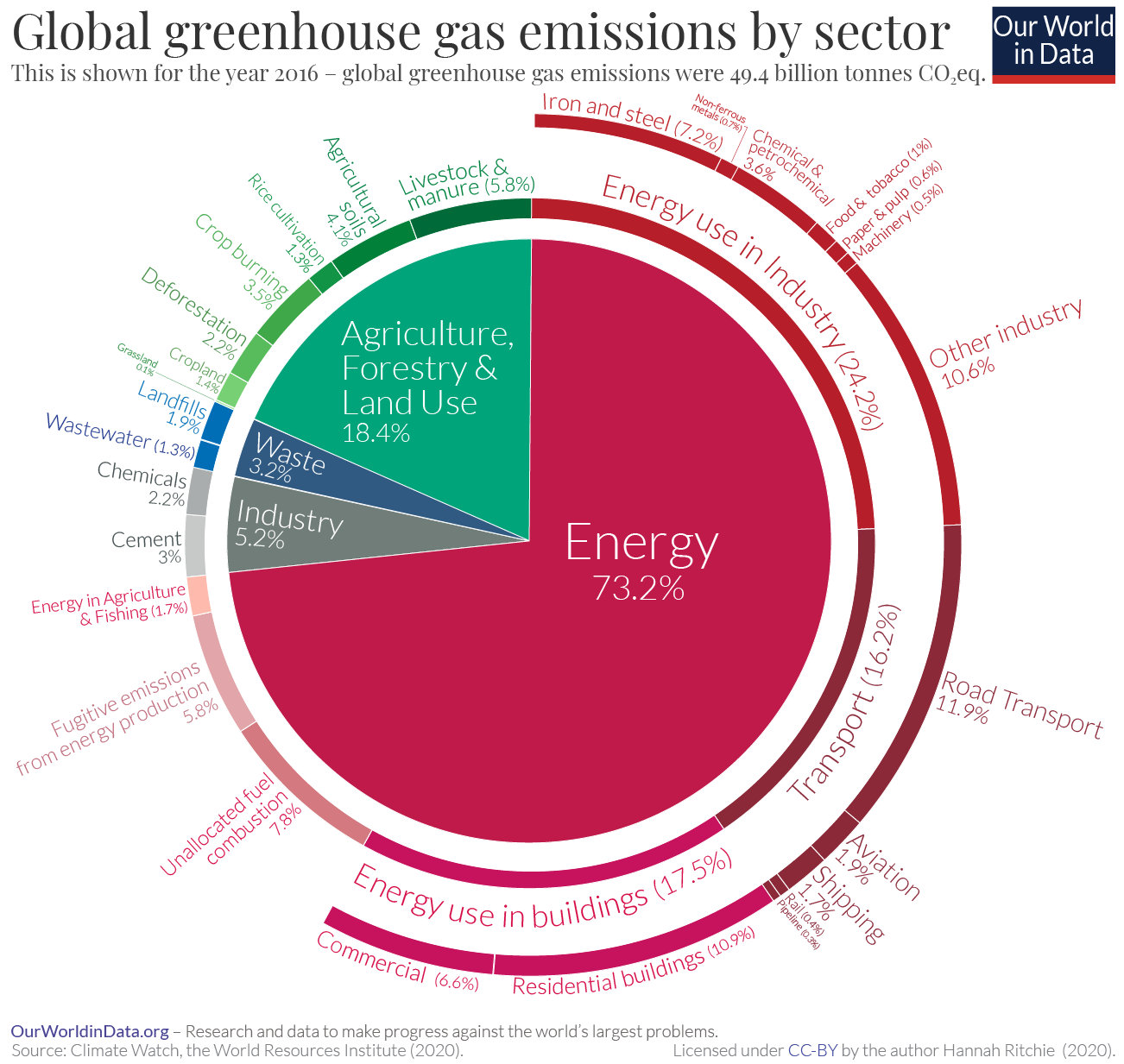

At the same time, over the past few years, I've explored more of the world's cuisines and generally become a better cook. What I've learned (which surely is obvious to many but was not obvious to me) is that the typical US diet is unnecessarily meat centric, and that being a vegetarian is much easier, healthier, and tastier when one basically stops eating typical American meals. Being a vegetarian is much easier when eating Indian food for instance, and it's laughably easy when eating Ethiopian.
I'm still rooting heavily for Impossible, because factory farming is a global atrocity. And, it would be really cool if one day, I could eat an Impossible burger that was cheaper and healthier than a regular burger. But for now, and for the foreseeable future, I think that my attempts to be vegetarian will revolve around learning to better cook food from non-American cuisines, foods that are better suited to not having meat.